Online Education in 2026: Trends, Accreditation, and Future
Anúncios
Driven by rapid technological shifts and evolving learner expectations, digital learning is undergoing a major structural transformation.
The 2026 Landscape of Online Education: 5 Emerging Trends and Accreditation Standards breaks down the top five trends shaping modern virtual classrooms and examines the updated accreditation rules designed to protect program quality.
The Evolution of Online Learning: A New Era Dawns
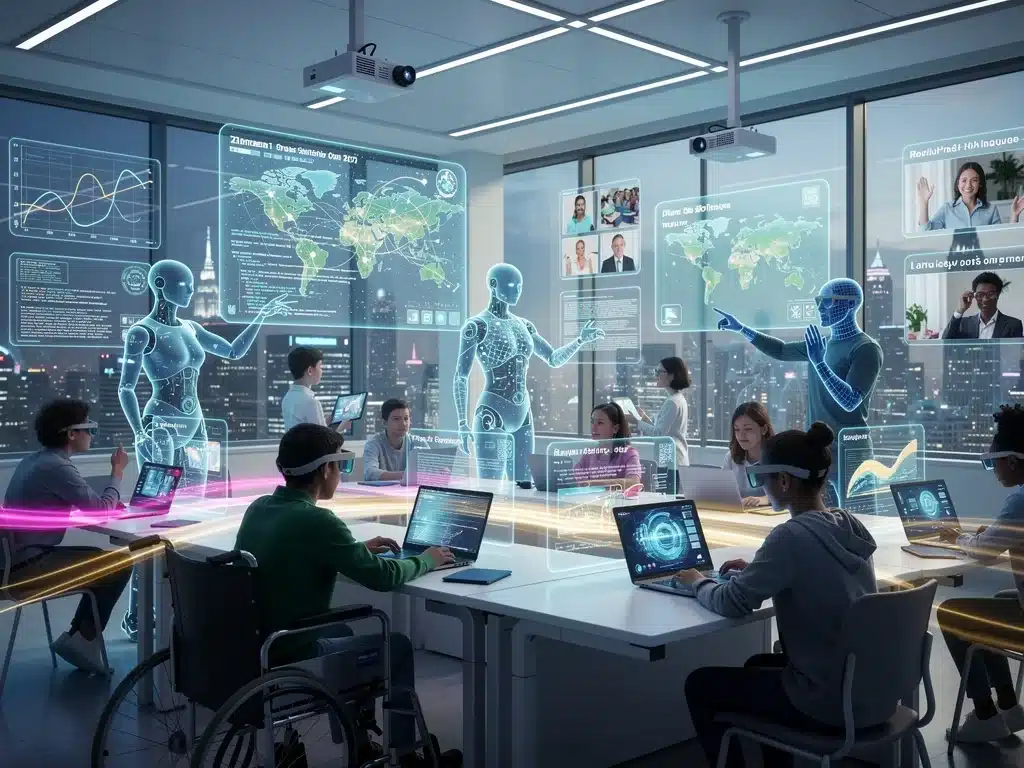
The trajectory of online education has accelerated dramatically, moving beyond mere digital replicas of traditional classrooms to innovative, immersive experiences.
Anúncios
This evolution is not just about technology; it encompasses pedagogical shifts and a deeper understanding of learner engagement and outcomes. The foundational principles of accessibility and flexibility continue to drive this expansion.
As we approach 2026, the online learning environment is characterized by increased sophistication in content delivery and interactive tools.
Institutions are investing heavily in platforms that offer personalized learning paths, adapting to individual student needs and learning styles. This focus on customization marks a significant departure from one-size-fits-all approaches.
Anúncios
The global reach of online education means that diverse student populations are now accessing knowledge from anywhere, anytime.
This inclusivity presents both immense opportunities and unique challenges, particularly concerning equitable access to technology and culturally relevant content.
The digital divide remains a critical consideration for policymakers and educators.
Trend 1: Hyper-Personalized Learning Pathways
Hyper-personalized learning is rapidly becoming a cornerstone of the 2026 Online Education Landscape, leveraging AI and data analytics to tailor educational experiences.
This approach moves beyond simple adaptive learning, creating bespoke curricula that respond to a student’s pace, preferences, and career aspirations.
The goal is to maximize engagement and optimize learning outcomes for every individual.
AI-driven platforms analyze student performance data in real-time, identifying areas where a learner might struggle or excel, and then adjust the content or teaching method accordingly.
This dynamic adaptation ensures that students receive support precisely when and where they need it, fostering a more efficient and effective learning process.
The integration of intelligent tutoring systems further enhances this personalized support.
The impact of hyper-personalization extends to career development, with platforms recommending courses and certifications aligned with emerging industry demands.
This foresight helps students acquire relevant skills, making them more competitive in a rapidly evolving job market. The focus is on lifelong learning, preparing individuals for continuous upskilling and reskilling.
AI-Driven Curriculum Adaptation
AI algorithms are now capable of dynamically adjusting course content, difficulty levels, and instructional strategies based on individual student progress and engagement.
This real-time adaptation ensures that learning remains challenging yet achievable, preventing both boredom and frustration.
The system constantly learns from student interactions, refining its recommendations and interventions to improve efficacy over time.
This continuous feedback loop is essential for maintaining the relevance and quality of the personalized learning experience. It represents a significant leap from static course materials.
Predictive Analytics for Student Success
- Early identification of at-risk students through performance patterns.
- Proactive intervention strategies, including tailored resources and mentor matching.
- Optimization of learning paths to minimize dropout rates and maximize completion.
Trend 2: Immersive Learning Experiences (VR/AR)
Immersive technologies like Virtual Reality (VR) and Augmented Reality (AR) are transforming the 2026 Online Education Landscape by offering unparalleled experiential learning opportunities.
These technologies create engaging, realistic simulations that allow students to interact with complex concepts and environments in ways previously impossible in a traditional online setting.
From virtual labs to historical reconstructions, the possibilities are vast.
VR and AR remove geographical barriers, enabling students to explore distant locations, conduct experiments in safe virtual environments, and collaborate on projects with peers worldwide.
This fosters a sense of presence and hands-on experience, significantly enhancing comprehension and retention. The sensory richness of these environments makes learning more memorable.
The integration of haptic feedback and advanced spatial audio further deepens the immersion, making virtual experiences feel incredibly real.
This level of engagement is particularly beneficial for fields requiring practical skills, such as medicine, engineering, and vocational training. It bridges the gap between theoretical knowledge and practical application.
Virtual Reality Classrooms and Labs
Virtual reality is creating fully immersive digital classrooms where students and instructors can interact as avatars, fostering a strong sense of community and collaboration.
Virtual labs allow for complex scientific experiments to be conducted without the need for expensive physical equipment or hazardous materials.
These virtual spaces are designed to replicate real-world scenarios, providing a safe and controlled environment for practice and experimentation.
Students can repeat procedures as many times as needed, building confidence and mastery before applying skills in a physical setting. This reduces risk and increases accessibility to high-quality practical training.
Augmented Reality for Interactive Textbooks
- Overlaying digital information onto physical textbooks and objects.
- Providing interactive 3D models and animated diagrams that enhance understanding.
- Enabling real-time annotations and collaborative learning experiences in physical spaces.
Trend 3: Micro-credentialing and Skill-Based Learning
The shift towards micro-credentialing and skill-based learning is a defining characteristic of the 2026 Online Education Landscape, reflecting the demand for flexible and relevant professional development.
Learners are increasingly seeking specific, verifiable skills that can be acquired quickly and applied directly to their careers. This model offers a more agile alternative to traditional degree programs.
Micro-credentials, often issued by industry leaders and educational institutions, validate proficiency in a particular skill or competency.
These digital badges and certificates are stackable, allowing individuals to build a personalized portfolio of qualifications tailored to their career goals.
This modular approach empowers learners to continuously update their skill sets in response to market changes.
Employers are also embracing micro-credentials as a reliable indicator of specific expertise, streamlining hiring processes and fostering a culture of continuous learning within their organizations.
This paradigm shift emphasizes demonstrated ability over protracted academic timelines, making education more accessible and directly applicable to workforce needs.

The Rise of Stackable Qualifications
Stackable qualifications allow individuals to earn smaller, focused credentials that can be combined to form larger certifications or even degree equivalents.
This flexibility supports career progression and provides clear pathways for professional growth without requiring a complete return to formal education.
This approach democratizes access to specialized knowledge, enabling individuals from diverse backgrounds to acquire high-demand skills.
It also promotes lifelong learning, as individuals can continually add new credentials to stay competitive in their fields. The emphasis is on continuous upskilling and reskilling.
Industry-Validated Competencies
- Collaboration between educational institutions and industries to define relevant skills.
- Direct input from employers in curriculum design for micro-credential programs.
- Standardized assessments that ensure the validity and reliability of earned badges.
Trend 4: Blockchain for Secure Credentials and Transcripts
Blockchain technology is set to revolutionize the integrity and accessibility of academic records within the 2026 Online Education Landscape.
By providing an immutable and decentralized ledger, blockchain ensures that credentials, transcripts, and certifications are tamper-proof and verifiable instantly.
This eliminates the risk of fraudulent documents and streamlines the verification process for both individuals and employers.
Students will have greater control over their academic data, able to share verified credentials with potential employers or other institutions securely and efficiently, without relying on intermediaries.
This enhances privacy and empowers learners with true ownership of their educational achievements. The transparency offered by blockchain fosters greater trust in online qualifications.
For institutions, blockchain reduces administrative burdens associated with issuing and verifying academic records, leading to significant cost savings and increased operational efficiency.
It also provides a robust framework for tracking and authenticating micro-credentials and skill-based certifications, ensuring their legitimacy in the global marketplace.
Immutable Academic Records
Blockchain creates a permanent, unalterable record of all academic achievements, from course completions to full degrees.
Once a credential is issued and recorded on the blockchain, it cannot be changed or deleted, guaranteeing its authenticity and integrity. This provides unprecedented security for educational records.
This immutability extends to all forms of digital badges and micro-credentials, ensuring that every earned skill is verifiable and trustworthy.
It builds confidence in the value of online certifications, which is crucial for their wider acceptance in professional fields. The system is inherently resistant to fraud and manipulation.
Decentralized Verification Systems
- Instantaneous verification of credentials by employers and other institutions.
- Reduction of administrative overhead for issuing and authenticating documents.
- Enhanced privacy for students, who control access to their own academic data.
Trend 5: Enhanced Accreditation Standards for Digital Learning
As online education expands and diversifies, the need for robust and adaptive accreditation standards becomes paramount in the 2026 Online Education Landscape.
Accrediting bodies are evolving their frameworks to specifically address the unique challenges and opportunities presented by digital learning environments.
This ensures quality, rigor, and comparability across all educational modalities.
New standards focus on pedagogical effectiveness in online settings, the adequacy of technological infrastructure, and the support services available to remote learners.
They also scrutinize data privacy, cybersecurity measures, and the ethical implications of AI-driven learning tools. The goal is to safeguard student welfare and maintain institutional accountability.
Accreditation now emphasizes outcomes-based assessment, measuring what students actually learn and can do, rather than simply focusing on input metrics.
This shift encourages innovation while ensuring that online programs meet high academic and professional benchmarks. It’s a continuous process of evaluation and improvement.

Quality Assurance for Online Programs
Accrediting agencies are developing specialized criteria for evaluating the effectiveness and quality of online programs, considering factors unique to digital delivery.
These include instructor training for online pedagogy, interactive content design, and robust student support systems. The aim is to ensure a learning experience comparable to or exceeding traditional formats.
The evaluation process now includes meticulous checks on technological robustness, ensuring platforms are reliable, accessible, and secure for all users.
This covers everything from server capacity to data encryption, providing a safe and stable environment for learning. Institutions must demonstrate a commitment to continuous technological improvement.
Global Recognition of Digital Credentials
- Harmonization of accreditation standards across international borders.
- Development of frameworks for recognizing micro-credentials and blockchain-verified skills.
- Emphasis on transferability of credits and qualifications between diverse institutions.
Addressing Equity and Access in Online Education
Ensuring equitable access to high-quality online education remains a critical challenge within the 2026 Online Education Landscape.
While digital learning offers unparalleled reach, disparities in internet connectivity, device ownership, and digital literacy can exacerbate existing inequalities.
Efforts are underway to bridge these gaps through policy, infrastructure development, and community initiatives.
Governments and non-profit organizations are investing in broadband expansion and providing subsidized devices to underserved communities, recognizing that access to technology is foundational for educational equity.
Furthermore, institutions are developing flexible models that accommodate varying levels of digital proficiency, offering training and support to all learners. This holistic approach is essential for true inclusivity.
Beyond hardware and connectivity, the design of online courses must also consider cultural relevance and diverse learning styles, ensuring that content is engaging and accessible to all.
This includes providing multilingual resources, incorporating diverse perspectives, and offering varied assessment methods.
The goal is to create an online environment where every student can thrive, regardless of their background or circumstances.
Bridging the Digital Divide
Efforts to bridge the digital divide are intensifying, with a focus on providing affordable internet access and necessary hardware to all students.
Public-private partnerships are crucial in deploying infrastructure and distributing resources to communities that lack adequate technological support. This foundational access is the first step towards equitable online learning.
Educational initiatives are also targeting digital literacy, equipping students with the skills needed to navigate online platforms effectively and safely.
This includes training on online research, digital communication, and cybersecurity best practices. Empowering students with these skills is as important as providing the technology itself.
Inclusive Course Design
- Development of culturally sensitive and diverse educational content.
- Provision of multiple accessibility features for students with disabilities.
- Flexible learning schedules and diverse assessment methods to accommodate varied needs.
The Role of AI and Automation in Educational Delivery
Artificial intelligence and automation are increasingly integral to the operational and pedagogical aspects of the 2026 Online Education Landscape.
Beyond personalized learning, AI is streamlining administrative tasks, enhancing content creation, and providing advanced analytical insights into student performance.
This integration allows educators to focus more on teaching and less on routine management.
AI-powered tools can automate grading for certain types of assignments, provide instant feedback to students, and even generate preliminary drafts of course materials.
This efficiency frees up valuable faculty time, enabling them to engage more deeply with students and develop more innovative pedagogical strategies. The strategic use of automation optimizes resource allocation.
Furthermore, AI can help identify trends in student data that might be invisible to human analysis, informing institutional decision-making and improving overall program effectiveness.
This data-driven approach allows for continuous refinement of online education offerings, ensuring they remain cutting-edge and responsive to learner needs. The combination of human expertise and AI capabilities creates a powerful synergy.
Automated Administrative Support
AI-driven chatbots and virtual assistants are handling routine student inquiries, managing enrollment processes, and providing technical support around the clock.
This automation improves response times and ensures that students receive timely assistance, enhancing their overall experience. It offloads repetitive tasks from human staff.
Automated scheduling and resource allocation systems optimize the use of faculty time and institutional facilities, ensuring smooth operation of online programs.
This efficiency contributes to the sustainability and scalability of digital learning initiatives. It allows institutions to manage larger student bodies with existing resources.
AI for Content Creation and Curation
- Generating preliminary course content, quizzes, and learning objectives.
- Curating relevant external resources and multimedia based on curriculum needs.
- Adapting existing materials into different formats for diverse learning preferences.
| Key Trend | Brief Description |
|---|---|
| Hyper-Personalized Learning | AI-driven adaptive pathways tailored to individual student needs and goals. |
| Immersive VR/AR Experiences | Virtual and augmented reality for experiential, engaging, and simulated learning. |
| Micro-credentialing & Skills | Focused, verifiable skill-based certifications for agile professional development. |
| Blockchain for Credentials | Secure, immutable verification of academic records and certifications. |
Frequently Asked Questions About Online Education in 2026
The 2026 Online Education Landscape is primarily shaped by hyper-personalized learning, immersive VR/AR experiences, micro-credentialing, blockchain for secure credentials, and enhanced accreditation standards. These trends collectively aim to make online learning more effective, accessible, and trustworthy for a global audience.
Accrediting bodies are evolving to include specific criteria for online pedagogy, technological infrastructure, and student support in digital environments. They also emphasize outcomes-based assessments and ethical considerations for AI tools, ensuring quality and rigor in the 2026 Online Education Landscape.
AI is fundamental for hyper-personalized learning, adapting content and teaching methods in real-time based on student performance and preferences. It also provides predictive analytics to identify at-risk students and optimize learning paths, significantly impacting the 2026 Online Education Landscape.
Micro-credentials offer flexible, skill-based certifications that are highly relevant to the rapidly changing job market. They allow learners to acquire specific, verifiable competencies quickly, making them more agile and competitive, a key feature of the 2026 Online Education Landscape.
Blockchain provides an immutable and decentralized ledger for academic records, ensuring credentials are tamper-proof and instantly verifiable. This eliminates fraud, streamlines verification processes, and empowers students with control over their data in the 2026 Online Education Landscape.
Looking Ahead: The Enduring Impact of Digital Transformation
The trends shaping the 2026 Online Education Landscape signify a profound and lasting transformation, moving beyond temporary adaptations to establish new paradigms for learning and accreditation.
These shifts demand continuous vigilance and proactive engagement from all stakeholders to fully harness the potential of digital education.
What emerges is a more flexible, personalized, and verifiable educational ecosystem, poised to meet the diverse needs of a global workforce.
To research top-rated digital degree programs and benchmark accredited institutions, explore the U.S. News & World Report online education hub.
The integration of advanced technologies with evolving pedagogical practices promises to redefine traditional notions of schooling and professional development.
This ongoing evolution will require adaptability from both institutions and learners.
Monitoring the implementation of new accreditation standards and the equitable deployment of these emerging technologies will be crucial.
The focus remains on ensuring that the future of online education is not only innovative but also inclusive, accessible, and of the highest quality for all learners.
The journey toward a fully realized digital learning future is dynamic and continuous.