Child Care Assistance Programs 2026: Finding Support for Working Parents

Anúncios
Latest developments on Child Care Benefits in 2026: How to Access Up to $5,000 in Federal Assistance, with key facts, verified sources and what readers need to monitor next in Estados Unidos, presented clearly in Inglês (Estados Unidos) (en-US).
Child Care Benefits in 2026: How to Access Up to $5,000 in Federal Assistance is shaping today’s agenda with new details released by officials and industry sources.
This update prioritizes what changed, why it matters and what to watch next, in a straightforward news format.
Anúncios
The federal government is preparing to roll out significant enhancements to child care support programs, offering crucial financial relief to millions of American families.
These new provisions, designed to address the escalating costs of child care, aim to make quality care more accessible and affordable.
As 2026 approaches, understanding the specific criteria and application procedures will be paramount for parents seeking to leverage these expanded benefits.
Anúncios
NewsyouToo provides an in-depth look at what families can expect and how to navigate the upcoming changes effectively.
Understanding the New Child Care Benefits in 2026 Landscape
The landscape of federal child care assistance is set to undergo a transformative shift in 2026, with the introduction of new policies and increased funding.
These changes are designed to provide more substantial support to families struggling with the high costs of child care.
The goal is to ensure that more children have access to safe, nurturing, and educational environments, which is critical for their development and for enabling parents to participate fully in the workforce.
Families should begin to familiarize themselves with these upcoming changes to prepare.
These new benefits represent a concerted effort by policymakers to address a long-standing economic challenge for American households.
The increased federal commitment underscores the recognition of child care as a fundamental need and a crucial component of economic stability.
Key Legislative Changes and Their Impact
Recent legislative actions have laid the groundwork for these expanded Child Care Benefits in 2026.
These measures include increased appropriations for existing programs and the creation of new initiatives aimed at broader eligibility and greater financial relief.
The legislative package focuses on both direct financial aid to families and investments in child care infrastructure.
This dual approach seeks to alleviate immediate financial burdens while also improving the overall quality and availability of child care services nationwide.
- Expanded eligibility criteria for lower and middle-income families.
- Increased per-child federal subsidies, potentially reaching $5,000.
- New funding for child care providers to enhance quality and capacity.
These legislative changes are expected to significantly reduce out-of-pocket expenses for many families. The expanded reach means that more households will qualify for assistance, extending support beyond those traditionally served by federal programs.
The emphasis on both financial relief and infrastructure improvement signals a holistic approach to child care challenges. This comprehensive strategy is anticipated to create a more robust and equitable child care system across the United States.
Eligibility Requirements for Child Care Benefits in 2026
Navigating the eligibility requirements for the enhanced Child Care Benefits in 2026 will be a critical step for families seeking assistance.
While specific details are still being finalized, general guidelines indicate a focus on income levels and employment status.
It is anticipated that eligibility will primarily be determined by household income relative to the federal poverty line and state median income.
Families should gather necessary financial documentation in advance to streamline the application process.
Some programs may also consider factors such as the number of dependents, special needs children, or parents enrolled in educational or training programs.
Staying informed about these criteria is essential for successful application.
Income Thresholds and Family Size Considerations
The income thresholds for Child Care Benefits in 2026 are expected to be more inclusive than previous years, aiming to support a wider range of working families. These thresholds will likely vary by state and will be adjusted based on family size.
Families with multiple children may receive higher maximum benefits, reflecting the increased cost of care for larger households. The goal is to provide equitable support that acknowledges the varying financial pressures faced by different family structures.
It is advisable for families to consult their state’s child care agency websites closer to 2026 for the most accurate and up-to-date income guidelines. These resources will offer precise figures and any state-specific adjustments.
Other Qualifying Factors and Documentation
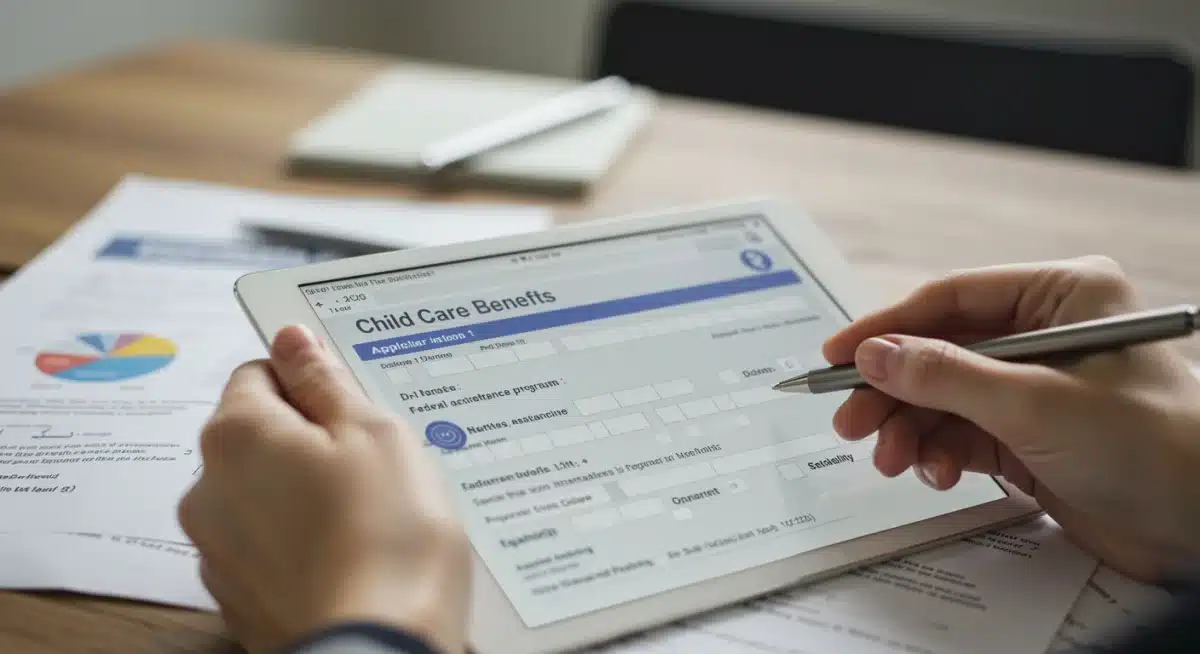
Beyond income, other factors may influence eligibility for Child Care Benefits in 2026. These can include parental work or education requirements, the age of the child, and the type of child care chosen (e.g., licensed center, family child care home).
Families will likely need to provide documentation such as proof of income, residency, citizenship or legal residency, and the child’s birth certificate. Maintaining organized records will significantly ease the application process.
- Proof of employment or enrollment in an educational program.
- Verification of child’s age and relationship to the applicant.
- Documentation from the chosen child care provider, if applicable.
Some programs may also offer priority to certain populations, such as homeless families, children with disabilities, or families involved with child protective services. It is important to check if any special circumstances apply to your household.
The emphasis on comprehensive documentation ensures that benefits are distributed fairly and to those most in need.
Preparing these documents in advance can prevent delays and ensure a smooth application experience for Child Care Benefits in 2026.
How to Apply for Federal Child Care Assistance in 2026
Applying for Child Care Benefits in 2026 will involve a streamlined process, primarily through state and local agencies. The federal government aims to simplify access to these vital funds, but understanding the steps is crucial.
Most applications are expected to be available online, with options for in-person assistance for those who need it. Families should ensure they have reliable internet access and a valid email address for communication regarding their application status.
Starting the application process early will be key, as demand for these benefits is anticipated to be high. Timely submission of all required documents can prevent delays in receiving assistance.
Online Application Portals and State Agencies
The primary method for applying for Child Care Benefits in 2026 will be through state-specific online portals. These portals are currently being updated to reflect the new federal guidelines and increased funding.
Each state will have its own dedicated website or section within a broader social services portal where families can initiate and track their applications. These platforms will also provide detailed instructions and FAQs.
- Locate your state’s Child Care and Development Fund (CCDF) agency website.
- Create an account and complete the online application form accurately.
- Upload all required supporting documents before the submission deadline.
Families are encouraged to review their state’s specific requirements carefully, as there may be variations in documentation or submission procedures. Many states also offer phone support and local offices for in-person assistance.
These online portals are designed to be user-friendly, but preparation is still essential.
Double-checking all entered information and uploaded documents before final submission can save considerable time and effort when applying for Child Care Benefits in 2026.
Required Documentation and Deadlines
A comprehensive set of documents will be necessary to prove eligibility for Child Care Benefits in 2026. This typically includes identification for all household members, proof of income, and verification of child care arrangements.
Families should anticipate needing recent pay stubs, tax returns, and official documents like birth certificates or social security cards. Some programs may also require a letter from the child care provider.
While specific deadlines for 2026 are yet to be fully announced, it is prudent to assume that applications will open early in the year and continue on a rolling basis until funds are exhausted. Early application is highly recommended.
It is important to note that incomplete applications are often a common cause of delays or rejections.
Taking the time to gather all necessary paperwork and ensuring its accuracy will significantly improve the chances of a successful application for Child Care Benefits in 2026.
Maximizing Your $5,000 Federal Assistance
Accessing the full $5,000 in federal assistance through Child Care Benefits in 2026 requires strategic planning and a clear understanding of how the funds are allocated. This maximum amount will likely be tied to specific circumstances or needs.
Families with lower incomes, multiple children, or children with special needs may be prioritized for higher levels of assistance. Understanding these factors can help families position themselves to receive the maximum available support.
It is also crucial to choose a child care provider that is eligible to receive federal subsidies. Not all providers may qualify, so verifying this before enrollment is a vital step.
Understanding Reimbursement vs. Direct Payments
The federal assistance for Child Care Benefits in 2026 may be distributed through various mechanisms, primarily reimbursement to parents or direct payments to child care providers.
Each method has implications for how families manage their finances.
Reimbursement models require parents to pay the child care costs upfront and then submit receipts for repayment, which can be challenging for some households. Direct payments, conversely, alleviate this immediate financial burden.
- Check if your state primarily uses a reimbursement system or direct payments.
- Understand the payment schedule and processing times for reimbursements.
- Confirm if your chosen child care provider accepts federal subsidies directly.
Some states may offer a hybrid approach, or allow families to choose between methods based on their financial situation. Clarifying the payment mechanism with your state agency is an important step.
Knowing whether you will be reimbursed or if payments go directly to your provider will help you budget effectively and avoid any unexpected financial strain. This clarity is essential for fully utilizing the Child Care Benefits in 2026.
Choosing an Eligible Child Care Provider
To fully utilize the Child Care Benefits in 2026, families must select a child care provider that is approved to receive federal subsidies. This typically means the provider must be licensed and meet certain quality standards.
State child care agencies maintain lists of eligible providers, and these lists are often searchable online. Families should verify a provider’s eligibility before enrolling their child to ensure the federal assistance can be applied.
Beyond eligibility, considering the quality, location, and philosophy of the child care provider is also important. These factors contribute to a positive experience for both the child and the family.
Some programs may also offer enhanced benefits for families who choose providers with higher quality ratings or those serving specific needs, such as extended hours or specialized care for children with disabilities.
Inquiring about these options can further maximize the impact of Child Care Benefits in 2026.
Impact of Child Care Benefits on Families and the Economy
The expansion of Child Care Benefits in 2026 is poised to have a profound impact not only on individual families but also on the broader U.S. economy. By reducing child care costs, these benefits empower parents and foster economic growth.
Families will experience significant relief from one of their largest household expenses, freeing up funds for other necessities or savings. This financial stability can lead to improved overall well-being and reduced stress.
Economically, accessible child care enables more parents, particularly mothers, to enter or remain in the workforce, boosting labor force participation and productivity. This ripple effect benefits businesses and contributes to a stronger national economy.
Empowering Parents and Workforce Participation
One of the most direct impacts of increased Child Care Benefits in 2026 is the empowerment of parents, especially those who have been limited by child care costs.
Many parents are forced to reduce work hours or leave their jobs entirely due to prohibitive expenses.
By alleviating this financial burden, the new benefits allow parents to pursue career opportunities, increase their earning potential, and contribute more fully to their household income.
This is critical for economic mobility and gender equity in the workplace.
The availability of affordable child care means fewer career interruptions and greater stability for working families. It supports parents in achieving their professional goals without compromising their children’s well-being or financial security.
Stimulating Local Economies and Child Care Sector Growth
The federal investment in Child Care Benefits in 2026 will also act as a significant stimulus for local economies. Increased demand for affordable child care will lead to job creation within the child care sector and related industries.
Child care providers will benefit from more stable funding, allowing them to invest in better facilities, higher wages for staff, and enhanced educational programs. This strengthens the quality and capacity of the entire child care ecosystem.
- Increased employment opportunities for child care workers.
- Growth in supporting businesses, such as educational suppliers and food services.
- Improved quality and availability of child care options for families.
This economic boost extends beyond the child care sector, as families with more disposable income are likely to spend more on local goods and services. The overall effect is a healthier, more vibrant economy at both local and national levels.
The sustained investment in child care through these benefits highlights a long-term commitment to supporting families and fostering economic resilience. It recognizes child care as an essential public good that underpins a thriving society and economy.
Preparing for the 2026 Child Care Benefits Rollout
As the implementation of Child Care Benefits in 2026 draws closer, proactive preparation is essential for families to successfully access the available federal assistance. Early planning can prevent last-minute complications and ensure a smooth transition.
Families should make it a priority to stay informed about official announcements from federal and state agencies regarding specific dates and procedural updates. Subscribing to newsletters from relevant government bodies can be beneficial.
Reviewing personal financial documents and household information now will streamline the application process once it opens. This foresight can make a substantial difference in securing timely support.
Monitoring Official Announcements and Updates
The federal and state governments will be releasing detailed guidelines and timelines for the Child Care Benefits in 2026. It is crucial for families to actively monitor these official announcements to stay current with any changes.
Official government websites, such as those for the Department of Health and Human Services or state child care agencies, will be primary sources of information.
Reliable news outlets like NewsyouToo will also provide timely updates and analysis.
Being aware of any public forums or informational webinars hosted by agencies can also offer valuable insights and opportunities to ask questions directly.
Staying connected to these sources ensures families receive accurate, first-hand information.
Gathering Necessary Documents in Advance
To ensure a swift application process for Child Care Benefits in 2026, families should begin gathering all necessary documentation well in advance. This includes financial records, identification, and child-related paperwork.
Organizing these documents now will prevent delays when the application window opens. Creating a dedicated folder, either physical or digital, for all child care benefit-related paperwork is a practical step.
- Recent tax returns and W-2 forms for income verification.
- Birth certificates or legal guardianship documents for all children.
- Proof of residency, such as utility bills or lease agreements.
It is also wise to ensure that all personal identification documents, like driver’s licenses or state IDs, are current and not expired. Any discrepancies in documentation can cause significant setbacks in the application process.
Proactive document collection is a simple yet effective strategy to ensure families are fully prepared to apply for Child Care Benefits in 2026. This step alone can significantly reduce stress and improve the chances of a successful application.
| Key Point | Brief Description |
|---|---|
| New Federal Aid | Up to $5,000 in assistance for Child Care Benefits in 2026. |
| Eligibility Focus | Primarily income-based, with considerations for family size and special needs. |
| Application Process | Mostly online via state agencies; early document gathering is crucial. |
| Economic Impact | Empowers parents, boosts workforce participation, and stimulates local economies. |
Frequently Asked Questions About Child Care Benefits in 2026
Families may be eligible to access up to $5,000 in federal assistance through the expanded Child Care Benefits in 2026. This amount can vary based on income, family size, and specific state programs, so checking local guidelines is essential for accurate figures.
Eligibility for Child Care Benefits in 2026 primarily depends on household income relative to federal and state poverty lines. Other factors include parental work or education status, child’s age, and the type of child care provider. Specific criteria will be released by state agencies.
Applications for Child Care Benefits in 2026 will typically be processed through state child care agencies, often via online portals. It’s recommended to gather all necessary financial and personal documents in advance and submit your application early once the window opens.
The method of payment for Child Care Benefits in 2026 can vary by state. Some states may offer direct payments to eligible child care providers, while others might use a reimbursement model where families pay upfront and are later reimbursed. Verify with your state’s program.
The Child Care Benefits in 2026 are expected to significantly boost the economy by increasing parental workforce participation, particularly for mothers. It will also support the growth of the child care sector, leading to job creation and improved service quality nationwide.
Looking Ahead
The introduction of expanded Child Care Benefits in 2026 marks a pivotal moment for American families and the national economy.
In this context, these federal assistance programs, offering up to $5,000, represent a substantial investment in the well-being of children and the long-term stability of households.
Consequently, as the rollout approaches, continued vigilance regarding official updates and proactive preparation will be paramount for maximizing these opportunities.
Furthermore, the long-term success of these benefits hinges on effective implementation and consistent access, which will ultimately empower more parents to thrive in the workforce.
Ultimately, staying informed is the most effective way to navigate the evolving landscape of Child Care Benefits in 2026.
To explore eligibility requirements and find local assistance, visit this guide on child care subsidy programs and secure the support your family deserves.