Education Department: $5 Billion Grant Opportunities 2026

Anúncios
Latest developments on Breaking News: The Department of Education Announces $5 Billion in New Grant Opportunities for 2026 (RECENT UPDATES), with key facts, verified sources and what readers need to monitor next in Estados Unidos, presented clearly in Inglês (Estados Unidos) (en-US).
Breaking News: The Department of Education Announces $5 Billion in New Grant Opportunities for 2026 (RECENT UPDATES) is shaping today’s agenda with new details released by officials and industry sources. This update prioritizes what changed, why it matters and what to watch next, in a straightforward news format.
Anúncios
Department of Education Unveils $5 Billion Grant Initiative for 2026
The U.S. Department of Education has officially announced a monumental allocation of $5 billion in new grant opportunities slated for the 2026 fiscal year. This significant funding aims to bolster various educational initiatives across the nation, addressing critical needs and fostering innovation.
This initiative represents a strategic investment in the future of American education, designed to support programs that enhance student outcomes, promote equity, and strengthen educational infrastructure. The announcement has generated considerable interest among school districts, higher education institutions, and non-profit organizations.
The grants are expected to target key areas such as teacher development, technology integration, STEM education, and support for underserved student populations. Further details on specific program categories and application guidelines are anticipated to be released in the coming months, providing clarity for prospective applicants.
Anúncios
Strategic Allocation and Key Focus Areas
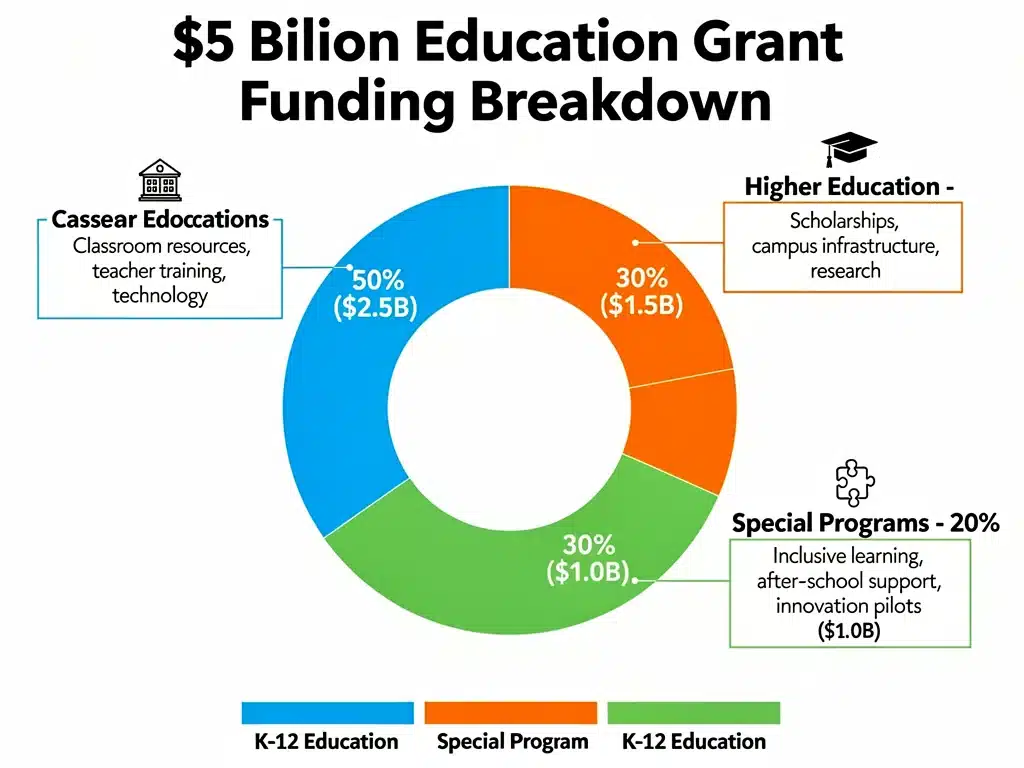
The $5 billion in new grant opportunities from the Department of Education is strategically distributed to maximize impact across the educational landscape. This funding aims to address long-standing challenges and emerging needs within the American education system.
Early indications suggest a significant portion will be directed towards programs that promote equitable access to quality education, particularly in low-income and rural areas. This includes support for early childhood education, K-12 school improvement, and post-secondary attainment initiatives.
Furthermore, the Department emphasizes the importance of innovation and evidence-based practices. Grants will likely prioritize projects demonstrating a clear potential for measurable improvements in student achievement and institutional capacity, aligning with the Department’s broader goals.
Prioritizing STEM and Workforce Development
A substantial allocation within the Department of Education grants for 2026 is expected to bolster Science, Technology, Engineering, and Mathematics (STEM) education. This focus aligns with national priorities to cultivate a skilled workforce capable of meeting future economic demands.
Funding will support initiatives that enhance STEM curricula, provide professional development for educators, and expand access to STEM learning opportunities for all students. This strategic investment aims to prepare students for careers in high-growth industries.
- Expansion of STEM programs in underserved schools
- Development of innovative STEM teaching methodologies
- Partnerships between educational institutions and industries
- Access to advanced technology and equipment for STEM learning
Support for Teacher Professional Development
The Education Department Grants 2026 will also channel significant resources into teacher professional development programs. Recognizing the pivotal role of educators, these grants seek to enhance teaching quality and retain experienced professionals.
Funding will support ongoing training, mentorship programs, and opportunities for educators to acquire new skills and certifications. This investment is crucial for adapting to evolving educational standards and incorporating best practices in the classroom.
- Professional learning communities for educators
- Training in culturally responsive teaching practices
- Mentorship programs for new and experienced teachers
- Opportunities for advanced degrees and certifications
Eligibility Criteria and Application Process Overview
Understanding the eligibility criteria and the application process is paramount for organizations seeking to secure funding from the Department of Education’s new grant opportunities. The Department aims for a transparent and accessible application system.
While specific guidelines for each grant program will vary, general eligibility typically includes state educational agencies, local educational agencies, higher education institutions, and non-profit organizations. Applicants must demonstrate a clear need and a well-defined plan for utilizing the funds.
The application process will likely involve submitting detailed proposals outlining project goals, methodologies, budget justifications, and evaluation plans. Prospective applicants are advised to begin preparations early, gathering necessary documentation and forming collaborative partnerships.
Key Dates and Deadlines for 2026 Grants
The Department of Education will soon release a comprehensive calendar outlining key dates and deadlines for the 2026 grant cycle. Adhering to these timelines will be crucial for all applicants to ensure their proposals are considered.
It is anticipated that initial notices of funding opportunities (NOFOs) will be published in late 2025, with application windows opening in early 2026. These deadlines are strict, and late submissions are typically not accepted.
- Release of Notice of Funding Opportunities (NOFOs)
- Application submission window opening
- Final application deadline
- Grant award announcements
Preparing a Competitive Grant Proposal
To maximize the chances of securing funding from the Department of Education, applicants must prepare highly competitive grant proposals. This involves meticulous planning, thorough research, and clear articulation of project objectives.
Successful proposals often demonstrate a strong alignment with the Department’s priorities, a clear understanding of the target population’s needs, and a realistic budget. Emphasizing measurable outcomes and sustainability plans can also significantly strengthen an application.
- Aligning with Department of Education priorities
- Clearly defining project goals and objectives
- Developing a realistic and justified budget
- Outlining a robust evaluation plan for outcomes
Impact on Educational Institutions and Students
The infusion of $5 billion through the Department of Education grants for 2026 is poised to have a transformative impact on educational institutions and students across the United States. This funding offers a critical opportunity to enhance learning environments and expand access to resources.
Schools and universities can leverage these grants to upgrade facilities, implement innovative teaching technologies, and develop specialized programs that cater to diverse student needs. The investment is expected to foster a more dynamic and inclusive educational landscape.
Ultimately, the direct beneficiaries will be the students, who stand to gain from improved academic resources, enhanced support services, and more equitable learning opportunities. This strategic funding aims to close achievement gaps and prepare students for success in a rapidly evolving world.
Addressing Educational Equity and Innovation
A core tenet of the Department of Education’s new grant opportunities is a strong emphasis on educational equity and innovation. The funding is designed to dismantle barriers to learning and foster creative approaches to instruction and program delivery.
Grants will support initiatives that target underserved populations, including students from low-income backgrounds, rural communities, and those with disabilities. The goal is to ensure all students have access to high-quality educational experiences, regardless of their circumstances.
Furthermore, the Department encourages innovative proposals that leverage new technologies, implement interdisciplinary approaches, and explore novel methods for student engagement and assessment. This forward-thinking approach aims to propel American education into a new era of excellence.
Innovative Approaches to Learning
The Department of Education is actively seeking proposals that introduce innovative approaches to learning and teaching. This includes projects that utilize cutting-edge technology, personalized learning models, and interdisciplinary curricula.
Funding will support pilot programs and scalable solutions that demonstrate potential for widespread adoption and significant positive impact on student outcomes. The focus is on fostering environments where creativity and critical thinking thrive.
- Integration of artificial intelligence in education
- Development of virtual and augmented reality learning tools
- Personalized learning pathways for diverse learners
- Project-based learning initiatives

Promoting Digital Equity in Education
Ensuring digital equity is a significant priority for the Department of Education in distributing these grants. The goal is to bridge the digital divide, providing all students with the necessary tools and internet access for modern learning.
Grants will support initiatives that provide devices, expand broadband access in underserved areas, and offer digital literacy training for students and families. This critical focus aims to ensure that technology serves as an enabler, not a barrier, to educational attainment.
- Provision of laptops and tablets to students
- Expansion of internet access in rural and low-income areas
- Digital literacy programs for students and educators
- Creation of online learning resources
Monitoring and Accountability for Grant Recipients
The Department of Education emphasizes robust monitoring and accountability measures for all recipients of the 2026 grant opportunities. This ensures that funds are utilized effectively and achieve their intended educational outcomes.
Grant recipients will be required to submit regular progress reports, detailing how funds are being spent and the impact of their programs on student achievement. The Department will conduct reviews and evaluations to ensure compliance and effectiveness.
Transparency and fiscal responsibility are paramount. The Department’s commitment to accountability aims to build public trust and demonstrate the tangible benefits of these significant investments in education. This oversight helps ensure the integrity of the grant programs.
Future Outlook and Long-Term Vision
The $5 billion in new grant opportunities for 2026 represents more than just financial aid; it embodies the Department of Education’s long-term vision for American education. This initiative is a foundational step towards a more robust, equitable, and innovative educational system.
The Department anticipates that these grants will catalyze lasting improvements in teaching practices, student outcomes, and institutional capacity. The focus is on creating sustainable models that continue to benefit communities long after the grant period concludes.
This forward-looking approach underscores a commitment to continuous improvement and adaptation in education. The success of these grants will inform future policy decisions and potential funding initiatives, shaping the trajectory of education for years to come.
| Key Point | Brief Description |
|---|---|
| Total Funding | $5 billion allocated for new education grants in 2026. |
| Focus Areas | Equity, STEM, teacher development, technology integration. |
| Eligibility | State/local agencies, higher ed, non-profits. |
| Application Window | Expected to open early 2026; watch for NOFOs late 2025. |
Frequently Asked Questions About Education Department Grants
The U.S. Department of Education has announced a total of $5 billion in new grant opportunities. This substantial funding is designated for the 2026 fiscal year, aiming to support a broad range of educational initiatives and programs across the United States.
The grants will prioritize several key areas, including educational equity, STEM education, teacher professional development, and technology integration. The Department aims to foster innovation and enhance learning opportunities for all students, particularly those in underserved communities, through these targeted investments.
Eligibility for the Department of Education grants typically includes state educational agencies, local educational agencies, higher education institutions, and non-profit organizations. Specific eligibility criteria will be detailed in the individual Notice of Funding Opportunities (NOFOs) for each grant program as they are released.
While official application windows will be announced with the release of each Notice of Funding Opportunity, prospective applicants should anticipate these opportunities opening in early 2026. It is advisable to monitor the Department of Education’s official channels for specific deadlines and guidelines starting in late 2025.
The Department of Education will implement robust monitoring and accountability measures. Grant recipients will be required to submit regular progress reports, detailing their use of funds and program impact. The Department will conduct reviews and evaluations to ensure compliance and effective utilization of the $5 billion in new grant opportunities.
What Happens Now
The announcement of $5 billion in new grant opportunities for 2026 from the Department of Education marks a pivotal moment for American education. Stakeholders across the nation must now prepare to navigate the detailed application processes and align their proposals with the Department’s strategic priorities. This funding has the potential to reshape educational landscapes, driving innovation and equity. Continued vigilance on official announcements and detailed guidelines will be crucial for institutions looking to leverage these significant investments. The long-term implications of these grants will depend on effective implementation and sustained commitment to educational excellence.