Housing Starts Drop: Mortgage Rates Impact Late 2026
Anúncios
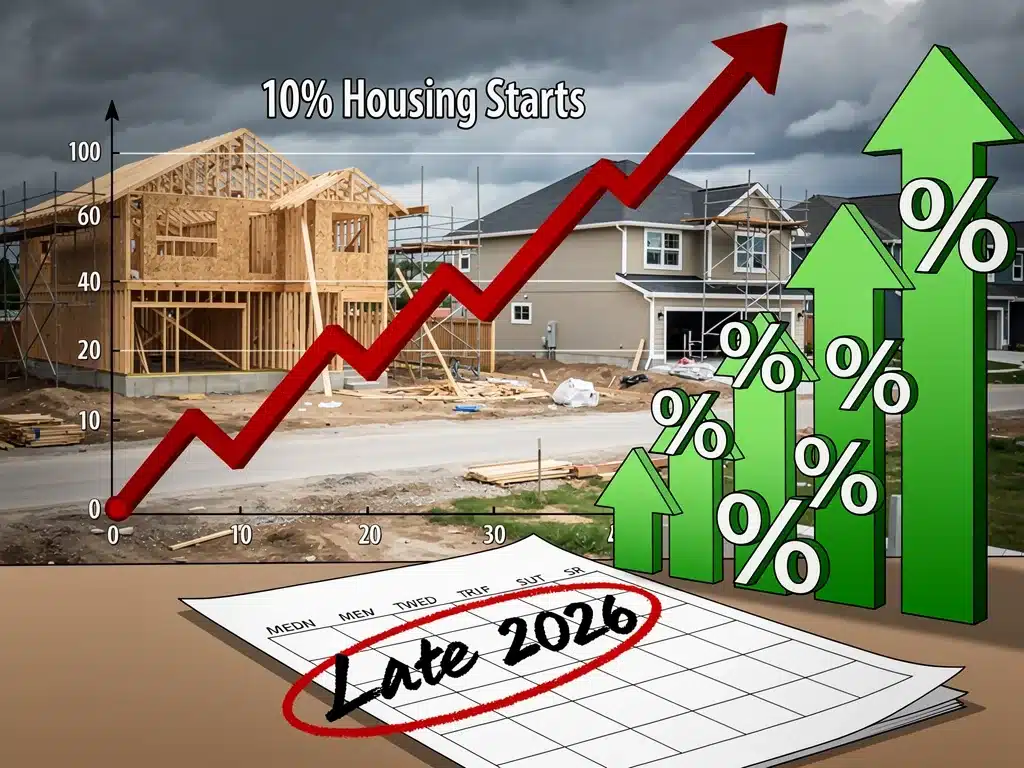
The recent 10% decline in housing starts signals significant shifts for the US housing market and future mortgage rates. This analysis delves into the financial implications, examining how supply and demand dynamics, inflation, and Federal Reserve policies will converge to shape borrowing costs by late 2026. Understand the critical factors influencing your future housing decisions.
Market Watch: How the Recent 10% Drop in Housing Starts Will Impact Mortgage Rates in Late 2026 (FINANCIAL IMPACT) is a critical topic for homeowners, prospective buyers, and investors alike. The latest data reveals a significant downturn in new home construction, prompting a closer look at what this means for the broader economy and, specifically, for the cost of borrowing for a home.
This article provides an in-depth analysis of the factors at play, offering context and expert perspectives on the potential trajectory of mortgage rates. We will explore how reduced supply, persistent demand, and macroeconomic forces are expected to converge, shaping the financial landscape by late 2026.
Anúncios
Understanding these dynamics is crucial for making informed financial decisions in a rapidly evolving market. We aim to equip readers with clear, objective information to navigate the complexities of the housing and mortgage sectors.
Understanding the Recent Decline in Housing Starts
The recent 10% drop in housing starts has sent ripples through the construction industry and the broader housing market. This decline signifies a reduction in the number of new residential units beginning construction, which directly impacts future housing supply.
Anúncios
Such a significant contraction often stems from a confluence of factors, including rising material costs, labor shortages, and increasing interest rates that make financing new projects more expensive. These challenges collectively discourage developers from initiating new builds, leading to fewer homes coming onto the market.
The implications are far-reaching, affecting everything from housing affordability to the overall health of the economy. A sustained decrease in housing starts can exacerbate existing housing shortages and intensify competition among buyers.
Key Drivers Behind the Downturn
Several critical factors have contributed to the recent decrease in housing starts. Supply chain disruptions continue to plague the construction sector, leading to delays and inflated prices for essential building materials like lumber, steel, and concrete.
Additionally, a persistent shortage of skilled labor, including carpenters, electricians, and plumbers, has hampered construction timelines and increased labor costs. These operational challenges make it more difficult and expensive for builders to complete projects efficiently.
Rising interest rates also play a significant role, as they increase the cost of capital for developers. Higher borrowing costs for construction loans can reduce profit margins, making new projects less attractive and contributing to the slowdown in housing starts.
- Increased material costs due to supply chain issues.
- Shortage of skilled labor in the construction industry.
- Higher interest rates impacting development financing.
Historical Context of Housing Starts
Examining historical trends provides valuable context for the current situation. Periods of significant drops in housing starts often precede or coincide with broader economic shifts or downturns.
For instance, during the 2008 financial crisis, housing starts plummeted, reflecting a collapse in demand and a tightening of credit. While the current situation differs, understanding past patterns helps in anticipating potential future scenarios.
Analyzing these historical precedents allows economists and market analysts to better forecast the long-term impact of the current decline. It highlights the sensitivity of the housing market to economic pressures and policy changes.
The Intricate Relationship Between Housing Supply and Mortgage Rates
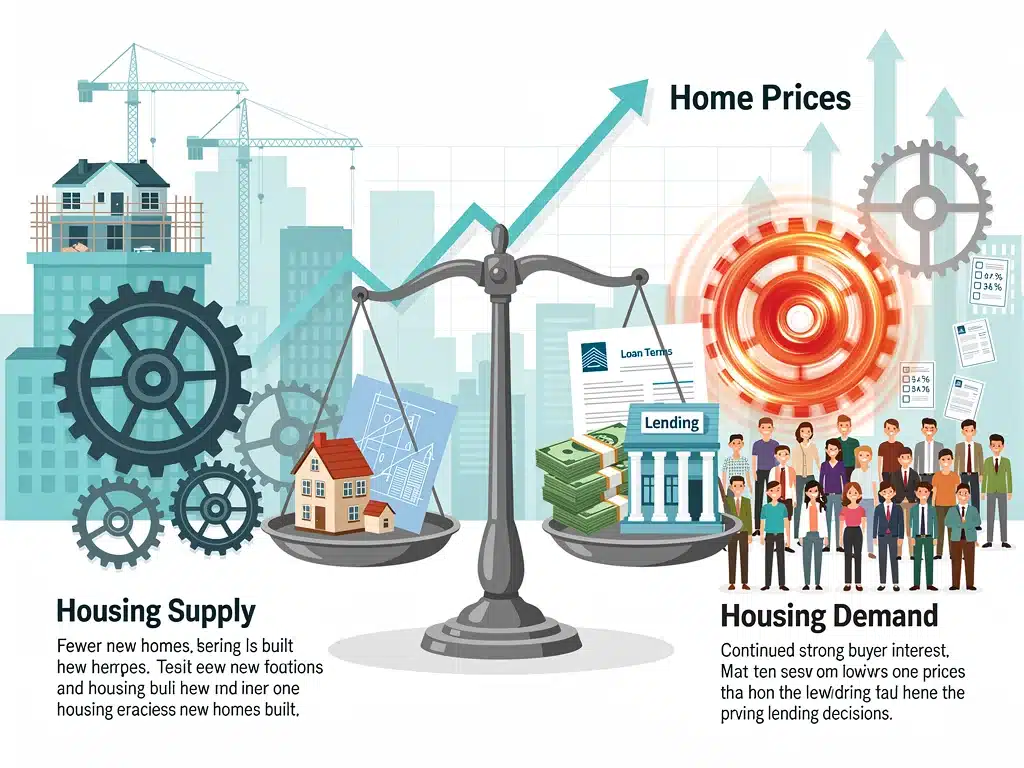
The connection between housing supply and mortgage rates is fundamental to understanding market dynamics. A reduction in housing starts directly translates to a tighter supply of available homes in the future, which can have a profound effect on pricing and borrowing costs.
When fewer new homes are built, the existing housing stock must accommodate ongoing demand, leading to increased competition among buyers. This heightened demand against limited supply typically pushes home prices upward, making homes less affordable for many.
In response to rising home prices and other economic indicators, mortgage rates often adjust, reflecting the broader economic environment. Lenders factor in inflation, the Federal Reserve’s monetary policy, and market risk when setting rates, all of which are influenced by housing supply dynamics.
How Reduced Supply Influences Demand and Prices
A significant drop in housing starts means that the pipeline for new homes is shrinking, creating an imbalance with persistent buyer demand. This scarcity drives up the value of existing properties, as prospective homeowners compete for a limited inventory.
The law of supply and demand dictates that when supply decreases and demand remains constant or grows, prices will rise. This scenario makes homeownership increasingly challenging for first-time buyers and those with limited budgets.
Higher home prices, in turn, can necessitate larger loan amounts, which can indirectly influence mortgage rates. Lenders may perceive a higher risk with larger loans, or the overall market conditions driven by these price increases can lead to rate adjustments.
The Role of Inflation and Federal Reserve Policy
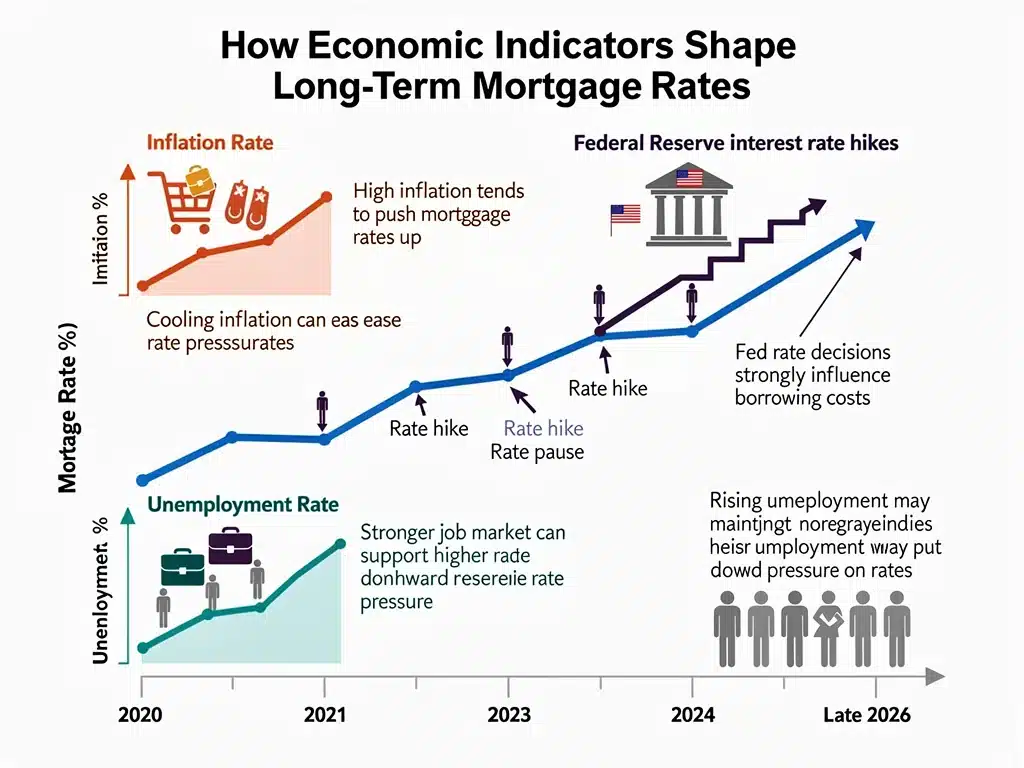
Inflation is a critical factor influencing mortgage rates, and reduced housing supply can contribute to inflationary pressures. When housing costs rise due to scarcity, it impacts the Consumer Price Index (CPI), a key measure of inflation.
The Federal Reserve closely monitors inflation when making decisions about the federal funds rate, which indirectly affects long-term mortgage rates. If inflation remains elevated, the Fed is more likely to maintain or even increase interest rates, pushing mortgage rates higher.
Therefore, a decrease in housing starts, by potentially fueling housing price inflation, can create a feedback loop that leads to tighter monetary policy from the Fed. This, in turn, translates to higher borrowing costs for consumers seeking home loans.
Projecting Mortgage Rates for Late 2026
Forecasting mortgage rates for late 2026 involves analyzing a complex interplay of economic indicators, market trends, and policy decisions. The recent 10% drop in housing starts adds another layer of complexity to these projections, suggesting a potential upward pressure on rates.
While no forecast is absolute, current analyses suggest that rates will likely remain elevated compared to pre-pandemic levels, possibly even increasing further. This outlook is primarily driven by expectations of continued inflation, a tight housing supply, and the Federal Reserve’s ongoing efforts to stabilize the economy.
Investors and financial institutions will be closely watching economic data releases, particularly those related to housing, employment, and inflation. These data points will serve as crucial signals for adjusting their rate expectations and lending strategies.
Factors Driving Mortgage Rate Trajectories
Several key factors are expected to drive the trajectory of mortgage rates towards late 2026. The Federal Reserve’s monetary policy, particularly its stance on interest rate hikes, remains paramount. If inflation proves more stubborn than anticipated, further rate increases could be on the horizon.
Additionally, the overall health of the U.S. economy, including GDP growth and unemployment rates, will play a significant role. A robust economy might give the Fed more room to maneuver, while a slowdown could prompt a more cautious approach.
The bond market, specifically the yield on 10-year Treasury notes, is another crucial indicator, as mortgage rates often track these yields. Factors affecting bond yields, such as investor sentiment and global economic stability, will indirectly influence mortgage rates.
- Federal Reserve’s interest rate decisions and inflation targets.
- Overall economic growth and employment data.
- Yields on 10-year Treasury notes.
Expert Predictions and Market Consensus
Market analysts and economists are offering varied, yet generally cautious, predictions for mortgage rates in late 2026. Many foresee rates stabilizing at a higher plateau than previously observed, rather than returning to the ultra-low levels of recent years.
Some experts anticipate that the persistent housing supply shortage, exacerbated by the drop in housing starts, will continue to exert upward pressure on prices. This, combined with ongoing inflationary concerns, could keep mortgage rates elevated to curb demand.
However, there are also arguments for a potential slight moderation if inflation cools significantly and the Federal Reserve achieves its targets. The consensus, however, leans towards a sustained period of higher borrowing costs compared to the immediate past.
Regional Variations and Local Market Impact
The impact of reduced housing starts and evolving mortgage rates will not be uniform across the United States. Regional economic conditions, local housing market dynamics, and population growth patterns will lead to significant variations in how different areas experience these changes.
Some regions, particularly those with strong job markets and high demand, may see an even more pronounced effect on home prices and affordability. Conversely, areas with slower growth or ample existing housing stock might be less affected by the national decline in new construction.
Understanding these localized differences is crucial for prospective homebuyers and investors. A national trend provides a broad overview, but local market analysis offers the granular detail needed for informed decision-making.
High-Demand vs. Low-Demand Areas
In high-demand metropolitan areas, where housing supply is already constrained and population growth is robust, the 10% drop in housing starts could intensify competition and accelerate price appreciation. This would make it even more challenging for buyers, potentially pushing mortgage rates higher due to increased perceived risk and demand for financing.
Conversely, in low-demand or declining population areas, the impact of fewer housing starts might be less severe. These markets may have an existing surplus of homes, or demand might not be strong enough to create significant upward pressure on prices or mortgage rates.
Therefore, while the national trend suggests a tightening market, local conditions will dictate the true experience for consumers. Buyers in competitive markets may face higher rates and prices, while those in slower markets might find more stable conditions.
The Influence of Local Economic Health
The economic health of a specific region plays a pivotal role in how it responds to national housing trends. Areas with diverse and resilient economies, strong job growth, and higher median incomes are generally better equipped to absorb the impact of reduced housing starts and elevated mortgage rates.
These regions often attract more residents and businesses, maintaining robust housing demand even amidst challenging market conditions. Lenders may also view these areas as less risky, potentially leading to slightly more favorable mortgage terms.
Conversely, regions heavily reliant on a single industry or experiencing economic stagnation may be more vulnerable. In such areas, higher mortgage rates combined with limited new construction could significantly dampen buyer activity and potentially lead to slower home value appreciation or even declines.
Implications for Homebuyers and Homeowners
The evolving market landscape, marked by a 10% drop in housing starts and potentially higher mortgage rates, carries significant implications for both prospective homebuyers and current homeowners. Understanding these impacts is essential for strategic financial planning.
For homebuyers, the prospect of reduced inventory and elevated borrowing costs means a more challenging purchasing environment. Homeowners, on the other hand, might see their equity grow due to limited supply, but could face higher costs if they need to refinance or move.
Navigating this environment requires careful consideration of personal financial situations, market trends, and long-term goals. Proactive planning and seeking expert advice will be more critical than ever.
Challenges for Prospective Homebuyers
Prospective homebuyers will likely face a dual challenge: higher home prices due to limited supply and increased monthly payments due to elevated mortgage rates. This combination significantly impacts affordability, especially for first-time buyers.
The reduced number of new homes coming to market means fewer options and more competition for available properties. This can lead to bidding wars and a sense of urgency that might push buyers to make decisions under pressure.
To mitigate these challenges, buyers may need to expand their search criteria, consider alternative financing options, or adjust their expectations regarding home size and location. Saving a larger down payment can also help offset higher borrowing costs.
Considerations for Current Homeowners
Current homeowners might experience a mixed bag of effects. The limited housing supply could lead to continued appreciation of their property values, increasing their home equity. This can be beneficial for those looking to tap into equity or sell in the future.
However, for homeowners considering refinancing, higher mortgage rates could make it less attractive or even cost-prohibitive compared to their current rates. Those looking to move to a new home might face the same challenges as new buyers: higher prices and rates for their next purchase.
It’s important for homeowners to regularly assess their financial situation, including their mortgage terms, and consider how potential rate changes might affect their long-term financial plans. Consulting with a financial advisor can provide tailored insights.
Government and Industry Responses to Housing Trends
In response to the significant 10% drop in housing starts and its potential impact on mortgage rates, both government bodies and industry associations are exploring various strategies. These responses aim to stabilize the housing market, address affordability concerns, and stimulate new construction.
Policymakers are examining measures such as incentivizing developers, streamlining permitting processes, and potentially offering financial assistance programs to buyers. The goal is to counteract the forces driving up costs and limiting supply.
Industry groups are advocating for policies that support sustainable growth, including investments in infrastructure and workforce development. Their collective efforts are crucial for navigating the challenges posed by the current housing landscape.
Policy Initiatives and Regulatory Changes
Government agencies are considering several policy initiatives to address the slowdown in housing starts. These may include tax incentives for builders who focus on affordable housing, grants for infrastructure development in new communities, and reforms to zoning laws that often restrict high-density construction.
Regulatory changes could also play a role, such as simplifying the approval process for new developments to reduce bureaucratic delays and costs. The aim is to make it easier and more financially viable for builders to bring new homes to market.
These policy adjustments are critical for fostering an environment where housing supply can meet demand more effectively, which in turn could help stabilize or even lower mortgage rates over the long term by easing inflationary pressures in the housing sector.
Industry Adaptations and Innovations
The construction industry itself is adapting to the challenges of rising costs and labor shortages through innovation. This includes a greater adoption of modular and prefabricated construction techniques, which can reduce on-site labor needs and speed up building times.
Developers are also exploring new material sourcing strategies to mitigate supply chain risks and control costs. Partnerships with educational institutions to train new skilled workers are another avenue being pursued to address labor shortages.
These industry-led innovations are vital for improving efficiency and reducing the overall cost of construction. By making homebuilding more affordable and quicker, these adaptations can help increase housing supply, indirectly influencing mortgage rates by alleviating market pressures.
| Key Point | Brief Description |
|---|---|
| Housing Starts Drop | Recent 10% decline impacts future housing supply and market dynamics. |
| Mortgage Rate Forecast | Rates likely to remain elevated by late 2026 due to inflation and supply. |
| Supply-Demand Imbalance | Limited new homes push prices up, influencing borrowing costs. |
| Economic Influences | Fed policy, inflation, and bond yields are key drivers for rates. |
Frequently Asked Questions About Housing Market Impact
A 10% drop in housing starts reduces the future supply of homes. With consistent or growing demand, this scarcity typically leads to increased competition among buyers, pushing home prices upward. This makes existing homes more valuable but less affordable for new buyers.
While no outcome is certain, current indicators suggest mortgage rates are likely to remain elevated or potentially increase by late 2026. This is due to factors like persistent inflation, Federal Reserve policies, and the tight housing supply resulting from fewer housing starts.
Inflation is a major driver of mortgage rates. If inflation remains high, the Federal Reserve is likely to maintain or raise interest rates to curb it. This, in turn, influences the cost of borrowing for lenders, which is then passed on to consumers as higher mortgage rates.
Prospective homebuyers should focus on strengthening their financial position. This includes saving a larger down payment, improving credit scores, and getting pre-approved for a mortgage. Exploring different loan products and being flexible with location and home type can also be beneficial.
Yes, various government programs exist at federal, state, and local levels to assist with housing affordability. These can include first-time homebuyer programs, down payment assistance, and tax credits. It’s advisable to research options specific to your region and eligibility.
Looking Ahead: Navigating the Housing Market
The recent 10% drop in housing starts underscores a pivotal moment for the U.S. housing market, with clear implications for mortgage rates in late 2026. This confluence of reduced supply, persistent demand, and macroeconomic pressures will necessitate careful navigation by all market participants.
Monitoring key economic indicators—inflation, Federal Reserve actions, and employment data—will be essential for anticipating shifts in borrowing costs. Both homebuyers and homeowners must remain agile, adapting their strategies to the evolving landscape.
Ultimately, the market will continue to adjust, and informed decision-making, coupled with a proactive approach, will be critical for successfully engaging with the housing market in the coming years.