Federal Reserve Announces Benchmark Rate Shift: Economic Breakdown
Anúncios
Navigating recent central bank monetary policy adjustments requires a clear understanding of how the latest Federal Reserve Benchmark Rate Shift impacts borrowing costs across the United States. The Federal Open Market Committee's recalibration directly reshapes interest rates on everything from mortgages to commercial lines of credit.
This strategic adjustment in policy rates forces financial institutions, corporate leaders, and households to re-evaluate their fiscal planning. Shifting baseline interest metrics ripple through capital markets, altering yield expectations, mortgage application volumes, and broader economic activity nationwide.
Staying ahead of federal monetary decisions helps investors and consumers protect capital and capitalize on shifting credit conditions. Let’s break down the economic mechanisms driving this rate adjustment and what it signals for future financial trends.
Understanding the Federal Reserve's Benchmark Rate Shift
The Federal Reserve's recent decision to raise its benchmark interest rate to 3.75% represents a significant tightening of monetary policy. This action is a direct response to persistent inflationary pressures that have been impacting the U.S. economy for an extended period.
Historically, such aggressive rate hikes are employed by the central bank to cool down an overheating economy by making borrowing more expensive. The objective is to reduce consumer spending and business investment, thereby slowing demand and bringing inflation back within the Federal Reserve's target range.
However, the rapid nature of this particular benchmark rate shift has raised concerns about the potential for an immediate national economic breakdown. Critics argue that while inflation control is vital, the speed and magnitude of this increase could tip the economy into a recession, leading to job losses and reduced economic activity.
Immediate Market Reactions and Financial Volatility
Following the announcement of the Federal Reserve's benchmark rate shift, financial markets experienced immediate and pronounced volatility. Stock markets saw significant dips as investors reacted to the prospect of higher borrowing costs and a potential slowdown in corporate earnings.
Bond markets also showed considerable movement, with government bond yields rising sharply. This indicates that investors are demanding higher returns for lending money to the government, reflecting increased risk perception and the new interest rate environment. The immediate national economic breakdown narrative gained traction as these market shifts unfolded.
Currency markets were not immune, with the U.S. dollar strengthening against major global currencies. This can make U.S. exports more expensive, potentially impacting international trade balances and adding another layer of complexity to the overall economic outlook. The global implications of the Federal Reserve Benchmark Rate Shift are being closely watched by international financial institutions.
Impact on Borrowing Costs and Consumer Spending
One of the most direct consequences of the Federal Reserve's benchmark rate shift is the immediate increase in borrowing costs for consumers. Adjustable-rate mortgages, credit card interest rates, and auto loan rates are all expected to rise, making debt more expensive for households.
This increase in the cost of borrowing is designed to dampen consumer demand, which in turn should help to bring down inflation. However, it also means that families will have less disposable income, potentially leading to a reduction in overall spending and a slowdown in retail activity.
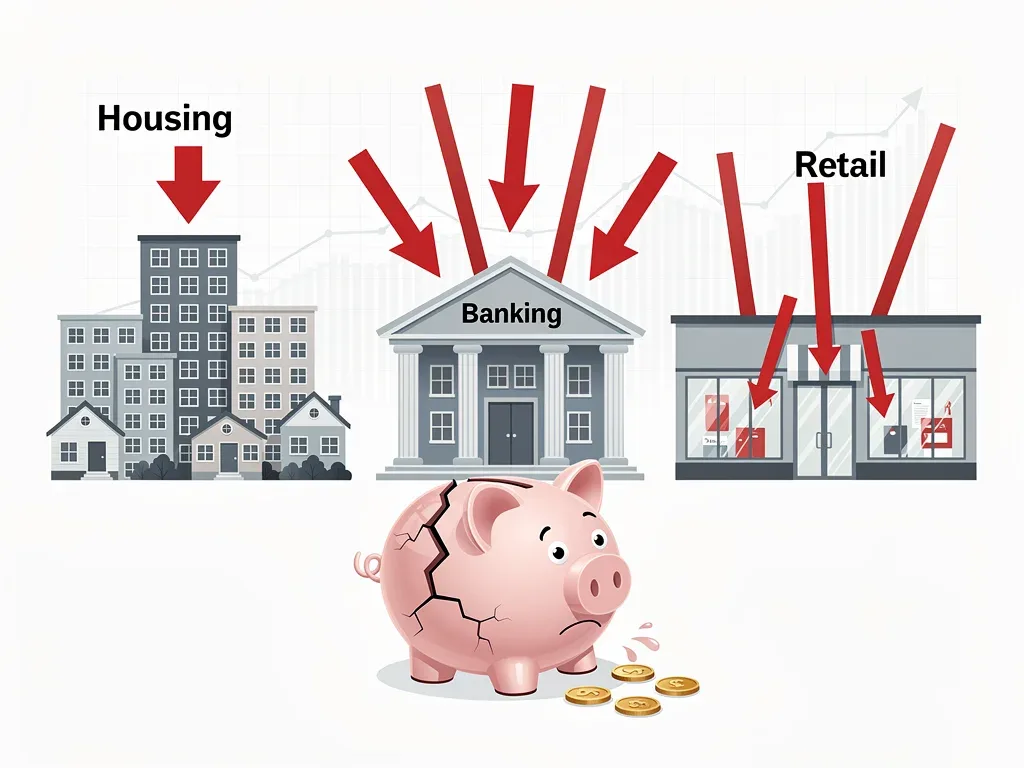
The housing market, in particular, is vulnerable to these changes. Higher mortgage rates can cool demand, reduce affordability, and potentially lead to a decline in home prices, further contributing to the immediate national economic breakdown concerns. The Federal Reserve Benchmark Rate Shift will profoundly affect housing.
Business Investment and Job Market Outlook
Businesses, too, face higher costs for financing investments and operations due to the benchmark rate shift. This can lead to a reduction in capital expenditures, delayed expansion plans, and a more cautious approach to hiring, impacting job creation.
Small and medium-sized enterprises (SMEs) are often more sensitive to changes in interest rates, as they may have less access to diverse funding sources. The increased cost of doing business could force some SMEs to scale back operations or even lay off employees, exacerbating an immediate national economic breakdown.
The job market, which has shown resilience in recent months, could face significant headwinds as companies tighten their belts. While the Federal Reserve aims for a 'soft landing,' many analysts fear that this aggressive benchmark rate shift could lead to a more severe economic contraction and increased unemployment.
Sector-Specific Impacts of the Rate Hike
The Federal Reserve's benchmark rate shift will not impact all sectors of the economy equally. Some industries, particularly those reliant on consumer credit or large capital investments, are likely to feel the pinch more acutely.
The real estate sector, encompassing both residential and commercial properties, is already experiencing a slowdown. Higher mortgage rates deter potential buyers, while increased financing costs for developers can stall new construction projects, contributing to an immediate national economic breakdown in this critical area.
Conversely, sectors that benefit from a stronger dollar or those with less reliance on debt financing might weather the storm better. However, the overarching sentiment of an immediate national economic breakdown stemming from the Federal Reserve Benchmark Rate Shift will likely create challenges across the board.
The Housing Market: A Rapid Cool Down
The housing market is undeniably one of the most vulnerable sectors to the Federal Reserve's benchmark rate shift. Mortgage rates have surged in response, making homeownership less affordable for many prospective buyers, especially first-time purchasers.
This rapid increase in borrowing costs is quickly cooling what was previously a red-hot market, leading to fewer sales and a potential deceleration in home price appreciation. Some regions may even see price corrections as demand wanes, contributing to an immediate national economic breakdown for homeowners.
Developers are also facing higher costs for construction loans, which could lead to a reduction in new housing starts. This dual pressure on both demand and supply sides of the market highlights the profound influence of the Federal Reserve Benchmark Rate Shift on real estate.
Banking and Financial Services Adjustments
For banks and financial institutions, the benchmark rate shift presents a mixed bag of opportunities and challenges. While higher interest rates can increase net interest margins for some, they also raise the risk of loan defaults and slow down new loan origination.
Lending standards are expected to tighten across the board as banks become more cautious in an environment of rising rates and economic uncertainty. This could further restrict access to credit for businesses and consumers, amplifying the effects of an immediate national economic breakdown.
Investment banks and asset managers may see increased volatility in their portfolios, requiring careful risk management. The Federal Reserve Benchmark Rate Shift is forcing a re-evaluation of strategies across the entire financial services industry.
Expert Analysis and Future Economic Outlook
Economists and financial analysts are offering varied perspectives on the long-term implications of the Federal Reserve's benchmark rate shift. While some believe the aggressive stance is necessary to combat inflation, others warn of an impending recession.
The consensus suggests that the path ahead will be challenging, with a high degree of uncertainty surrounding the exact trajectory of the economy. The risk of an immediate national economic breakdown is a significant concern that policymakers are actively trying to mitigate.
Monitoring key economic indicators such as inflation rates, unemployment figures, and GDP growth will be crucial in assessing the effectiveness of the Federal Reserve's policy and forecasting future economic health. The Federal Reserve Benchmark Rate Shift will be a defining moment.
Inflation vs. Recession: The Delicate Balance
The Federal Reserve's primary mandate is to maintain price stability and maximum employment. The current benchmark rate shift is a direct attempt to achieve price stability by reining in inflation, which has been eroding purchasing power.
However, the aggressive nature of the rate hike increases the risk of triggering a recession, a period of significant economic contraction. The challenge for the Federal Reserve is to find the delicate balance that brings inflation down without causing an immediate national economic breakdown and widespread job losses.
Many economists are divided on whether a 'soft landing' is still achievable or if the economy is destined for a period of contraction. The Federal Reserve Benchmark Rate Shift has intensified this debate, with strong arguments on both sides.
Global Economic Repercussions
The U.S. economy does not operate in isolation, and the Federal Reserve's benchmark rate shift will have global repercussions. A stronger U.S. dollar, driven by higher interest rates, can create challenges for countries with dollar-denominated debt, making their repayments more expensive.
Emerging markets, in particular, may face capital outflows as investors seek higher returns in the U.S., potentially destabilizing their economies. This interconnectedness means that an immediate national economic breakdown in the U.S. could have cascading effects worldwide.
International trade dynamics will also be affected, as U.S. imports become cheaper and exports more expensive. Global policymakers are closely watching the impact of the Federal Reserve Benchmark Rate Shift on the broader international economic landscape.
Government Response and Policy Adjustments
In response to the Federal Reserve's benchmark rate shift and the looming threat of an immediate national economic breakdown, government bodies are evaluating potential policy adjustments. Fiscal policy, managed by Congress and the Executive Branch, often complements monetary policy.
Discussions around targeted relief programs, infrastructure spending, or tax adjustments may emerge as ways to cushion the blow of higher interest rates. The goal would be to support vulnerable populations and sectors without further fueling inflation, a challenging balancing act.
Coordination between the Federal Reserve and fiscal authorities will be crucial in navigating these turbulent economic waters. The comprehensive response to the Federal Reserve Benchmark Rate Shift will determine the severity and duration of any economic downturn.
Legislative Actions and Economic Support
Congress may consider legislative actions aimed at providing economic support to mitigate the impact of the benchmark rate shift. This could include measures to assist small businesses, extend unemployment benefits, or provide direct financial aid to households struggling with rising costs.
However, any such actions would need to be carefully crafted to avoid exacerbating inflationary pressures, which is the very problem the Federal Reserve is trying to solve. The political landscape and economic necessity will shape the nature of these potential interventions.
The effectiveness of these legislative responses will be key to preventing a deeper immediate national economic breakdown. The Federal Reserve Benchmark Rate Shift requires a multi-pronged approach from all government branches.
International Cooperation and Trade Policies
Given the global ramifications of the Federal Reserve's benchmark rate shift, international cooperation will become increasingly important. Discussions with global economic partners and international financial organizations may focus on mitigating spillover effects and stabilizing global markets.
Trade policies could also be re-evaluated as countries adjust to the new economic reality. A stronger dollar and potential U.S. economic slowdown could alter trade relationships and necessitate new agreements to ensure economic stability and growth.
The interconnectedness of global economies means that a coordinated international response can help avert a more widespread immediate national economic breakdown. The implications of the Federal Reserve Benchmark Rate Shift extend far beyond U.S. borders.
Strategies for Businesses and Consumers
As the Federal Reserve announces benchmark rate shift to 3.75%: immediate national economic breakdown becomes a reality, both businesses and consumers must adapt their strategies. Proactive planning and financial prudence are more critical than ever.
For businesses, this means re-evaluating debt structures, optimizing cash flow, and potentially delaying non-essential investments. Identifying areas for cost reduction and increasing operational efficiency will be paramount to navigate the tighter credit environment.
Consumers should focus on managing existing debt, building emergency savings, and making informed decisions about new loans or major purchases. Understanding the impact of the Federal Reserve Benchmark Rate Shift on personal finances is essential.
Financial Planning for Households
Households are strongly advised to review their personal finances in light of the benchmark rate shift. Prioritizing high-interest debt, such as credit card balances, becomes even more important as interest rates rise.
Building or bolstering an emergency fund provides a crucial buffer against unexpected expenses or potential job insecurity. Prudent budgeting and tracking spending will help families manage their resources more effectively during this period of economic uncertainty.
For those considering major purchases like homes or cars, re-evaluating affordability and exploring all financing options is critical. The Federal Reserve Benchmark Rate Shift directly impacts the cost of these large investments.
Business Resilience and Adaptation
Businesses must focus on resilience and adaptation to withstand the challenges posed by the Federal Reserve's benchmark rate shift. This includes stress-testing financial models, diversifying revenue streams, and maintaining strong relationships with lenders.
Exploring alternative financing options, such as lines of credit or government-backed loans, can provide flexibility in a tighter credit market. Companies that can quickly adjust their operating models to changing consumer demand will be better positioned to succeed.
Investing in technologies that improve efficiency and reduce long-term costs can also be a wise strategy. The Federal Reserve Benchmark Rate Shift demands agility and foresight from the business community.
Key Point | Brief Description |
|---|---|
Rate Hike Impact | Federal Reserve increased benchmark rate to 3.75% to combat inflation, affecting borrowing costs. |
Economic Fallout | Immediate national economic breakdown concerns, with market volatility and increased recession risks. |
Sectoral Effects | Housing, banking, and consumer spending are directly hit, while businesses face higher financing costs. |
Future Outlook | Uncertainty persists regarding inflation vs. recession, requiring adaptive strategies from all stakeholders. |
Frequently Asked Questions About the Federal Reserve Rate Shift
What does a 3.75% benchmark rate shift mean for the economy?▼
A 3.75% benchmark rate shift by the Federal Reserve indicates a significant tightening of monetary policy. It means borrowing money becomes more expensive across the board, impacting everything from consumer loans and mortgages to business investments. This aims to slow economic activity and curb inflation, but it also increases the risk of an immediate national economic breakdown.
How will this rate hike affect my personal finances?▼
Your personal finances will likely be affected by higher interest rates on credit cards, auto loans, and adjustable-rate mortgages. Saving accounts might see slightly higher returns, but the overall cost of borrowing will increase. It's crucial to review your debt and consider strategies to manage increased expenses due to the Federal Reserve Announces Benchmark Rate Shift to 3.75%: Immediate National Economic Breakdown.
Is an immediate national economic breakdown inevitable after this shift?▼
While the risk of an immediate national economic breakdown is heightened, it's not inevitable. The Federal Reserve aims for a 'soft landing,' where inflation is controlled without triggering a severe recession. However, the aggressive nature of this benchmark rate shift makes that goal more challenging. Economic indicators will be closely monitored to determine the outcome.
Which sectors of the U.S. economy will be most impacted?▼
Sectors highly dependent on borrowing, such as housing and automotive, are expected to be significantly impacted. Businesses relying on credit for expansion will also face higher costs. The Federal Reserve Announces Benchmark Rate Shift to 3.75%: Immediate National Economic Breakdown will create headwinds for industries sensitive to interest rate fluctuations and consumer spending.
What steps should businesses take in response to the rate hike?▼
Businesses should review their financial structures, optimize cash flow, and consider delaying non-essential capital expenditures. Strengthening relationships with lenders and exploring alternative financing options are also critical. Adapting to potential shifts in consumer demand and focusing on operational efficiency will be key to navigating the challenges presented by the Federal Reserve Announces Benchmark Rate Shift to 3.75%: Immediate National Economic Breakdown.
What This Means
The Federal Reserve's recent benchmark rate shift to 3.75% underscores a determined effort to stabilize prices amidst persistent inflation. This move, while necessary, carries substantial risk, signaling a period of significant adjustment for the U.S. economy.
All stakeholders, from large corporations to individual households, must now navigate a landscape defined by higher borrowing costs and increased economic uncertainty.
The coming months will reveal the true extent of the immediate national economic breakdown and the effectiveness of current policy responses.