Medicaid Expansion 2026: Impact on Healthcare Access for Millions

Anúncios
Latest developments on Medicaid Expansion in 2026: Understanding the Impact on Healthcare Access for Millions, with key facts, verified sources and what readers need to monitor next in Estados Unidos, presented clearly in Inglês (Estados Unidos) (en-US).
Medicaid Expansion in 2026: Understanding the Impact on Healthcare Access for Millions is shaping today’s agenda with new details released by officials and industry sources. This update prioritizes what changed, why it matters and what to watch next, in a straightforward news format.
The Evolving Landscape of Medicaid Expansion in 2026
As 2026 approaches, the discussions surrounding Medicaid Expansion intensifies, signaling significant shifts in healthcare access for millions. Policymakers and advocacy groups are keenly observing trends and legislative efforts that could redefine eligibility and coverage across the United States.
Anúncios
The core objective of Medicaid Expansion, primarily driven by the Affordable Care Act (ACA), is to extend health insurance coverage to low-income adults. This expansion aims to close critical gaps in the healthcare system, providing essential services to vulnerable populations who previously fell into a coverage gap.
Understanding the nuances of Medicaid Expansion in 2026 requires a look at both historical context and projected future impacts. The ongoing debates and state-level decisions will ultimately determine the scope and effectiveness of these crucial healthcare programs.
Anúncios
Anticipated Changes and Enrollment Projections for 2026
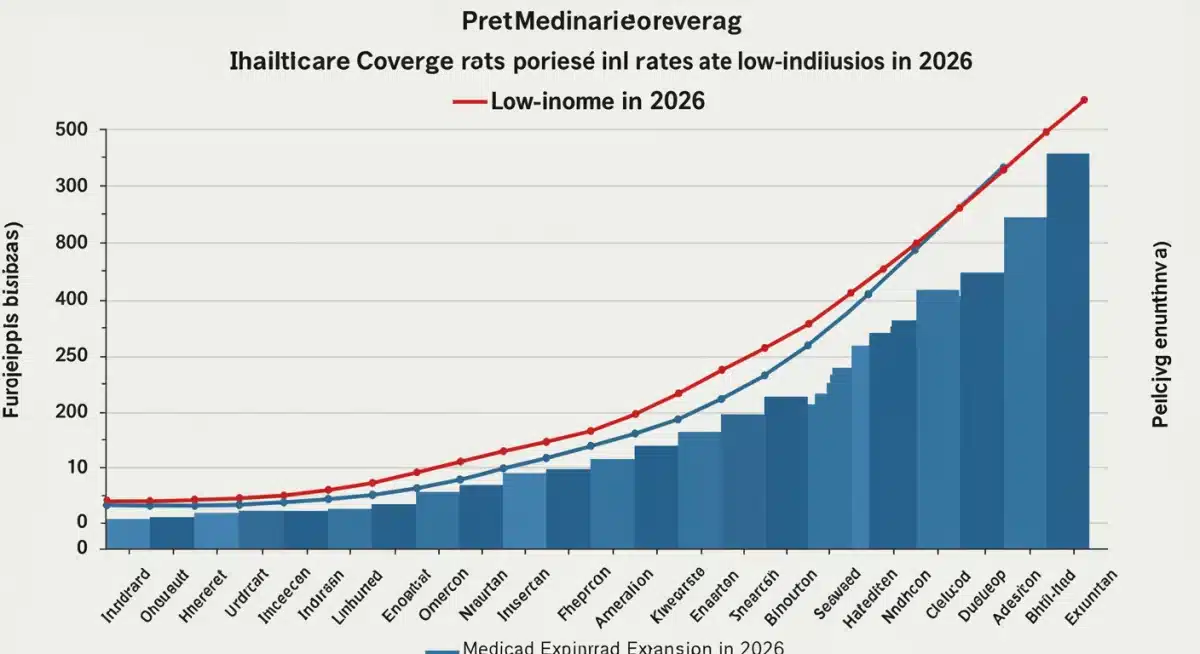
The year 2026 is poised to bring notable changes to Medicaid eligibility criteria and enrollment figures. Experts project a substantial increase in the number of individuals gaining healthcare coverage, particularly in states that have recently adopted or are considering expanding their programs.
These projections are based on current legislative trajectories and the economic conditions affecting low-income households. The ongoing efforts to stabilize and enhance the ACA are a significant factor in the anticipated growth of Medicaid enrollment.
Furthermore, federal incentives and state-specific policy adjustments are playing a crucial role in encouraging broader participation in Medicaid Expansion. This collective momentum indicates a transformative period for healthcare accessibility.
Eligibility Adjustments and New Beneficiaries
- Expansion typically covers adults with incomes up to 138% of the federal poverty level.
- New legislation or state ballot initiatives could modify these income thresholds in certain regions.
- Millions of previously uninsured individuals are expected to gain access to comprehensive health benefits.
The expansion significantly impacts individuals who historically earned too much for traditional Medicaid but too little to qualify for subsidies on the health insurance marketplace. Medicaid Expansion 2026 aims to bridge this critical gap, ensuring more Americans receive necessary medical care.
State-Level Implications and Regional Disparities
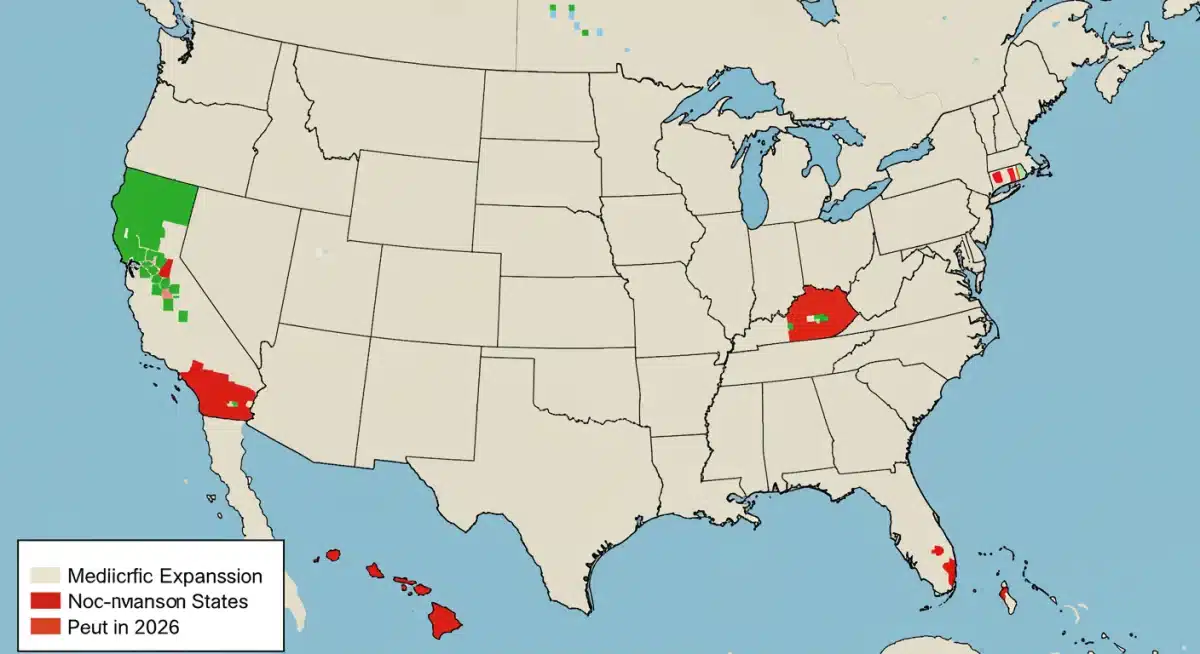
The impact of Medicaid Expansion in 2026 will vary significantly from state to state, reflecting diverse policy choices and economic realities. States that have already expanded Medicaid will continue to refine their programs, while non-expansion states face renewed pressure to adopt the expansion.
Regional disparities in healthcare access and outcomes are a direct consequence of these differing state-level decisions. Understanding these variations is essential for comprehending the national landscape of healthcare coverage.
Advocates continue to highlight the economic and health benefits for states that embrace Medicaid Expansion, including reduced uncompensated care costs and improved public health metrics. These arguments fuel ongoing efforts to persuade holdout states.
Economic Benefits for Expanding States
- Reduced uncompensated care costs for hospitals and healthcare providers.
- Increased economic activity through federal funding inflows and job creation in the healthcare sector.
- Improved financial stability for individuals, reducing medical debt and bankruptcy rates.
States that have embraced Medicaid Expansion often report a stronger healthcare infrastructure and healthier populations. The federal government covers a significant portion of the expansion costs, making it an attractive option for many state budgets, particularly as Medicaid Expansion 2026 draws near.
Funding Mechanisms and Federal Support
The financial sustainability of Medicaid Expansion in 2026 relies heavily on federal funding mechanisms. The Affordable Care Act established a framework where the federal government covers a substantial portion of the costs for newly eligible beneficiaries, providing a strong incentive for states to expand.
This federal financial commitment significantly reduces the burden on state budgets, making the expansion a more viable option. Understanding these funding structures is crucial for evaluating the long-term viability and impact of the program.
Ongoing discussions in Congress often touch upon potential adjustments to these funding formulas, which could influence future state participation. The stability of federal support remains a key factor in the success of Medicaid Expansion 2026.
Federal Matching Rates and State Contributions
- The federal government covers 90% of the costs for individuals newly eligible under expansion.
- States are responsible for the remaining 10%, which is often offset by savings in other state programs.
- This enhanced federal matching rate is a primary driver for states considering or implementing expansion.
The enhanced federal matching rate is a powerful motivator, significantly easing the financial strain on states. This fiscal arrangement allows states to extend critical healthcare services to their low-income populations without overwhelming their own treasuries, making Medicaid Expansion 2026 a fiscally sound choice for many.
Impact on Healthcare Providers and Systems
The expansion of Medicaid in 2026 will have a profound impact on healthcare providers and the broader healthcare system. Hospitals, clinics, and individual practitioners in expanding states often experience a reduction in uncompensated care, leading to greater financial stability.
This financial relief allows providers to invest in infrastructure, expand services, and improve the quality of care. The influx of newly insured patients also leads to increased demand for primary care and specialty services, prompting system adjustments.
However, it also presents challenges, such as the need to manage increased patient volumes and ensure adequate staffing. The healthcare system must adapt to effectively serve the growing number of individuals covered by Medicaid Expansion 2026.
The increased number of insured patients means more predictable revenue streams for healthcare facilities. This stability can lead to better planning, investment in new technologies, and a more robust healthcare infrastructure overall. Healthcare systems are actively preparing for the anticipated changes.
Addressing Health Disparities and Equity
A key objective of Medicaid Expansion in 2026 is to reduce health disparities and promote health equity across diverse populations. By extending coverage to low-income individuals, the program aims to address systemic barriers to care that disproportionately affect minority groups and rural communities.
Access to preventative care, chronic disease management, and mental health services can significantly improve health outcomes for these vulnerable populations. The expansion acts as a vital tool in the broader effort to create a more equitable healthcare system.
The focus on health equity is not just about access to care, but also about improving the quality of life and economic stability for millions. Medicaid Expansion 2026 stands as a critical component in this ongoing societal effort.
Improved Access for Vulnerable Populations
- Reduced rates of uninsured individuals among racial and ethnic minorities.
- Enhanced access to mental health and substance use disorder treatment services.
- Greater availability of preventative care, leading to earlier disease detection and better management.
Medicaid Expansion directly tackles some of the most persistent health inequalities. By ensuring that more people can access necessary medical attention, the program contributes to a healthier, more productive society. This aspect is central to the ongoing importance of Medicaid Expansion 2026.
Challenges and Ongoing Debates
Despite its benefits, Medicaid Expansion in 2026 continues to face challenges and ongoing debates. Political resistance in non-expansion states, concerns about program costs, and administrative complexities are among the key hurdles that need to be addressed.
These debates often center on state sovereignty, fiscal responsibility, and the role of government in healthcare. Finding common ground and sustainable solutions remains a priority for policymakers and healthcare advocates.
The future trajectory of Medicaid Expansion depends significantly on how these challenges are navigated and resolved. The dialogue surrounding Medicaid Expansion 2026 is dynamic and continually evolving.
One significant challenge involves ensuring that newly eligible individuals are aware of their options and can navigate the enrollment process effectively. Outreach and education efforts are critical to maximizing the impact of the expansion and reaching those who need it most. This is an important consideration as we look towards Medicaid Expansion 2026.
The Future Outlook for Healthcare Access Post-2026
Looking beyond 2026, the long-term outlook for healthcare access in the United States will be significantly shaped by the current wave of Medicaid Expansion. The program’s evolution will continue to be a focal point in national healthcare policy discussions, influencing future legislative actions and public health initiatives.
Continued monitoring of health outcomes, economic impacts, and enrollment trends will be essential for assessing the full scope of the expansion’s success. Data-driven insights will inform future adjustments and policy directions.
The sustained commitment to accessible healthcare for all remains a paramount goal, and Medicaid Expansion is a cornerstone of this endeavor. The post-2026 era promises further refinement and potential growth in coverage.
Potential Future Policy Directions
- Further federal incentives to encourage remaining non-expansion states to join.
- Integration of Medicaid services with broader social determinants of health initiatives.
- Emphasis on value-based care models within Medicaid to improve efficiency and outcomes.
The ongoing dialogue about healthcare reform will undoubtedly include discussions about strengthening and adapting Medicaid to meet evolving population needs. The success of Medicaid Expansion 2026 will serve as a critical precedent for these future policy decisions, shaping the nation’s health landscape for decades to come.
| Key Aspect | Brief Description |
|---|---|
| Eligibility Changes | Anticipated increase in income thresholds for coverage in several states. |
| State-Level Impact | Varying degrees of expansion and benefits across different U.S. states. |
| Federal Funding | Continued federal support covering a significant portion of expansion costs. |
| Healthcare Providers | Reduced uncompensated care and increased patient volumes for facilities. |
Frequently Asked Questions About Medicaid Expansion 2026
Medicaid Expansion extends health coverage to low-income adults, primarily under the ACA. 2026 is significant due to anticipated policy refinements, potential new state adoptions, and the cumulative impact of years of expansion efforts, further shaping healthcare access for millions.
While most states have already expanded, a few non-expansion states continue to debate the issue. By 2026, several of these remaining states may adopt expansion through legislative action or ballot initiatives, driven by federal incentives and local advocacy for Medicaid Expansion.
For individuals already covered, Medicaid Expansion 2026 will likely mean continued access to comprehensive benefits. The system may see improved stability and capacity due to increased funding and a broader insured population, potentially enhancing overall service quality and availability.
States benefit from reduced uncompensated care costs, significant federal funding, and improved public health outcomes. It also stimulates local economies and provides critical health safety nets for their most vulnerable residents, demonstrating the broad positive impact of Medicaid Expansion 2026.
Concerns often include state budget impacts, even with federal matching funds, and the capacity of healthcare systems to handle increased patient loads. Ongoing policy adjustments and economic stability will be crucial for the sustained success of Medicaid Expansion in 2026 and beyond.
What this means
The continued evolution of Medicaid Expansion in 2026 underscores a pivotal moment for healthcare access in the United States. The anticipated changes will directly influence the health and financial well-being of millions, particularly low-income adults. As federal and state governments navigate these complex policy landscapes, the focus remains on enhancing coverage and reducing disparities. Monitoring legislative developments, state-level implementation, and the experiences of newly insured individuals will be crucial for understanding the full scope of this transformative period. The trajectory of Medicaid Expansion in 2026 will set a precedent for future healthcare policy decisions, emphasizing the importance of sustained efforts to ensure equitable access to care.