Supreme Court's 6-3 Digital Privacy Ruling: Tech Sector Impact
Anúncios
What if a single judicial decree changed how major tech platforms handle every byte of your personal information? The landmark Digital Privacy Ruling has officially rewritten the ground rules for tech giants, forcing a major shift in how consumer data is safeguarded, processed, and monetized across the digital economy.
This divided high-court verdict imposes strict constitutional boundaries on corporate surveillance and data-sharing practices. Standard user agreements and broad consent policies are no longer enough to insulate tech providers, leaving executives scrambling to overhaul compliance frameworks and secure cloud architectures.
From venture-backed startups to trillion-dollar tech conglomerates, the commercial landscape face immediate operational disruption. Here is how this defining legal precedent fundamentally reshapes data governance, enterprise security requirements, and consumer rights.
Understanding the Landmark Digital Privacy Ruling
The Supreme Court has delivered a pivotal 6-3 digital privacy ruling, setting new precedents for how digital data is collected, stored, and utilized across the United States. This decision directly impacts technology companies, from startups to established giants, necessitating a reevaluation of their operational frameworks.
This landmark judgment emphasizes individual rights concerning digital information, potentially reshaping user expectations and corporate responsibilities. The implications extend beyond legal compliance, influencing product development, marketing strategies, and customer relations within the tech ecosystem.
The ruling clarifies several ambiguities surrounding digital privacy, providing a more defined legal landscape. However, it also introduces new challenges for companies striving to innovate while adhering to stricter privacy standards.
Key Provisions and Their Immediate Impact on Tech
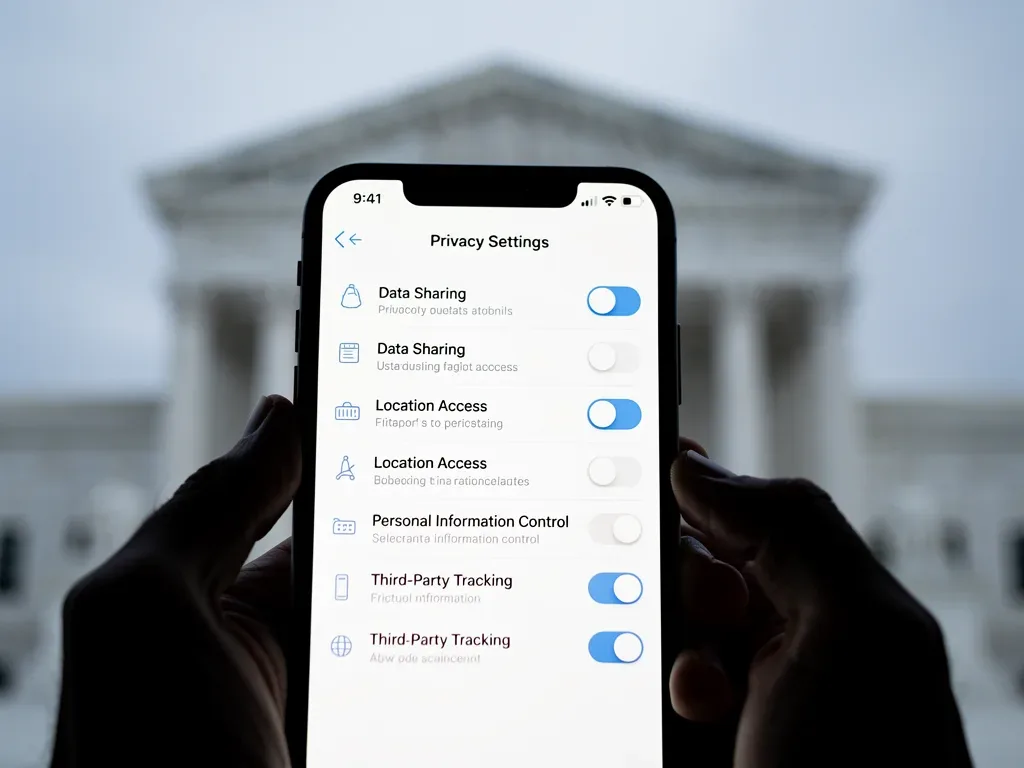
The core of the digital privacy ruling centers on enhanced protection for personal data, particularly in areas previously considered gray zones. This includes stricter consent requirements for data collection and limitations on how third-party data can be shared and processed.
Tech companies must now meticulously review their data handling practices to ensure full compliance with these new provisions. Failure to adapt could result in significant legal penalties and reputational damage, making immediate action imperative for all stakeholders.
Early assessments indicate that companies heavily reliant on broad data collection for targeted advertising or user profiling will experience the most substantial operational shifts. The ruling mandates greater transparency and accountability in these processes.
Defining Data Collection Boundaries
Explicit consent now required for specific data types.
Limitations on cross-platform data aggregation without user approval.
Increased user control over personal data deletion and access.
The digital privacy ruling explicitly redefines what constitutes permissible data collection. This means tech firms can no longer rely on vague terms of service to justify extensive data harvesting, pushing them towards more granular and transparent consent mechanisms.
This shift necessitates a re-engineering of data architectures and user interfaces. Companies must design systems that not only comply with the letter of the law but also embody the spirit of enhanced user privacy.
Compliance Challenges for the US Tech Sector
Adhering to the Supreme Court's digital privacy ruling presents a complex array of challenges for the US tech sector. Companies face the daunting task of updating legacy systems, revising privacy policies, and training employees on new compliance protocols, all within a compressed timeline.
Small and medium-sized enterprises (SMEs) in particular may struggle with the resource allocation required to meet these new standards. The cost of compliance, including legal consultations and technological upgrades, could be substantial, potentially stifling innovation for some.
Furthermore, the ruling introduces an element of legal uncertainty as lower courts interpret and apply these new standards. This evolving legal landscape demands continuous monitoring and adaptive strategies from tech firms.
Navigating New Regulatory Landscapes
Investment in privacy-enhancing technologies (PETs) is crucial.
Development of clear, user-friendly privacy policies.
Regular internal audits and compliance checks are now essential.
The digital privacy ruling necessitates a proactive approach to regulatory engagement. Tech companies will need to work closely with legal experts and industry associations to interpret the nuances of the judgment and develop best practices.
This period of adjustment will test the agility and adaptability of many tech organizations. Those that embrace privacy as a core value, rather than a mere compliance burden, are likely to emerge stronger.
The shift towards a more privacy-centric digital ecosystem is undeniable. Companies that delay their response to this digital privacy ruling risk falling behind competitors and incurring significant legal and financial repercussions.

Impact on Data Monetization and Business Models
The Supreme Court's digital privacy ruling will inevitably force many tech companies to rethink their data monetization strategies. Business models heavily reliant on selling or sharing user data with third parties will require significant restructuring to align with the new legal framework.
This could lead to a pivot towards subscription-based models or alternative revenue streams that are less data-intensive. The challenge lies in maintaining profitability while respecting enhanced user privacy rights, a delicate balance for many organizations.
The ruling may also spur innovation in privacy-preserving technologies, such as federated learning or differential privacy, as companies seek new ways to derive insights from data without compromising individual privacy.
Redefining User Data Value
The digital privacy ruling underscores a fundamental shift in how user data is perceived and valued. It moves away from treating data as a freely exploitable resource towards recognizing it as a protected asset belonging to the individual.
This redefinition will influence negotiations with data partners and advertising platforms. Companies must now demonstrate a clear value proposition for data collection, ensuring users understand and consent to its specific uses.
The long-term effect could be a more ethical and sustainable data economy, where trust and transparency are paramount. Companies that build this trust will likely gain a competitive advantage in the post-ruling landscape.
Consumer Rights and User Empowerment
A significant outcome of the digital privacy ruling is the substantial empowerment of consumers regarding their digital data. Individuals now possess greater control over their personal information, including rights to access, rectify, and erase data held by tech companies.
This newfound authority will likely increase user demands for transparency and accountability from platforms and services. Consumers are expected to become more discerning about which services they use, prioritizing those with strong privacy commitments.
The ruling sets a precedent for future digital rights legislation, potentially paving the way for even stronger consumer protections. This shift could foster a more user-centric digital environment where privacy is a default, not an afterthought.
Enhancing Digital Autonomy
Clearer mechanisms for users to review and manage their data.
Simplified processes for withdrawing consent for data usage.
Increased awareness campaigns by advocacy groups on new user rights.
The digital privacy ruling fundamentally alters the power dynamic between users and tech providers. It provides individuals with tangible tools to assert their digital autonomy, moving beyond abstract concepts of privacy to actionable rights.
This empowerment could lead to a more informed user base, actively participating in the management of their digital footprint. Tech companies that embrace these changes will build stronger, more loyal customer relationships.
Anticipated Legislative and Judicial Responses
The Supreme Court's digital privacy ruling is expected to trigger a wave of legislative and judicial responses across the country. State legislatures may introduce new bills to complement or expand upon the federal standards, leading to a patchwork of regulations.
Lower courts will also play a crucial role in interpreting the nuances of the ruling, shaping its practical application through various legal challenges and precedents. This ongoing legal evolution will require continuous monitoring by tech firms.
Furthermore, international bodies and governments will observe this digital privacy ruling closely, potentially influencing global data protection standards. The US decision could serve as a benchmark or a point of contention in future international legal discussions.
Industry lobbying efforts are also anticipated as tech companies seek to influence how these new standards are implemented and interpreted. The interplay between judicial decisions, legislative action, and industry advocacy will define the future of digital privacy.
Future Outlook for the US Tech Landscape
The Supreme Court's digital privacy ruling marks a significant inflection point for the US tech landscape. It signals a new era where privacy considerations are paramount, influencing everything from product design to corporate governance.
Companies that proactively integrate privacy into their core operations, rather than treating it as an afterthought, will be better positioned for long-term success. This includes investing in robust security infrastructure and fostering a culture of privacy awareness.
The ruling may also foster greater competition, as smaller, privacy-focused startups challenge established players. The ability to demonstrate superior privacy protections could become a key differentiator in a crowded market.
Innovation in a Privacy-First World
Innovation will not cease, but it will undoubtedly evolve within this privacy-first paradigm. Developers will need to find creative solutions that deliver value and functionality without compromising user data.
This could lead to breakthroughs in areas like privacy-preserving AI and decentralized data management. The digital privacy ruling, while challenging, ultimately presents an opportunity for the tech sector to mature and build greater public trust.
The future tech landscape will prioritize ethical data practices, transparency, and user control. Companies that lead in these areas will define the next generation of digital services.
Key Takeaway | Description |
|---|---|
Enhanced User Control | Individuals gain more rights over their digital data, including access and deletion. |
Stricter Data Consent | Tech companies must obtain explicit consent for data collection and usage. |
Business Model Shifts | Data monetization strategies will require significant re-evaluation and adaptation. |
Increased Compliance Burden | Tech firms face new legal and operational challenges to ensure adherence. |
Frequently Asked Questions About the Digital Privacy Ruling
What is the primary focus of this Supreme Court digital privacy ruling?▼
The primary focus of the digital privacy ruling is to strengthen individual control over personal digital data. It establishes new legal standards for how technology companies collect, process, and share user information, aiming to prevent unauthorized access and misuse. This ruling significantly alters the landscape for data handling practices.
How does this ruling affect tech companies' data collection practices?▼
Tech companies must now implement more stringent consent mechanisms for data collection. Vague terms of service are no longer sufficient; explicit, informed consent is required for specific data uses. This necessitates a comprehensive review and potential overhaul of existing data acquisition strategies and user agreements.
What are the implications for user data rights?▼
Users gain enhanced rights, including the ability to request access to their data, correct inaccuracies, and demand deletion of their personal information. This empowers individuals with greater autonomy over their digital footprint, pushing companies towards increased transparency and user-friendly privacy controls.
Will this digital privacy ruling lead to changes in business models?▼
Yes, business models heavily reliant on extensive data monetization, particularly through third-party sharing or targeted advertising, will likely need significant adjustments. Companies may explore alternative revenue streams, such as subscription services, or invest in privacy-preserving technologies to adapt to the new regulatory environment.
What should tech companies do to ensure compliance?▼
Tech companies should conduct thorough legal audits of their data practices, update privacy policies, and invest in compliance training for employees. Implementing privacy-by-design principles and consulting with legal experts are crucial steps to navigate the complexities introduced by this digital privacy ruling and avoid penalties.
Looking Ahead: The Evolving Digital Privacy Landscape
The Supreme Court's digital privacy ruling fundamentally reshapes the operational environment for the US tech sector, marking a definitive shift towards greater accountability and user protection.
This decision will undoubtedly spur further legislative action and judicial interpretations, creating a dynamic legal landscape that companies must continuously monitor.
The emphasis on explicit consent and user control signals a future where privacy is not merely a compliance checkbox but a core component of trust and innovation. Companies that proactively adapt to these new standards will not only mitigate risks but also build stronger, more ethical relationships with their users.