Labor Department Reports Unexpected 4.1% Unemployment Shift
Anúncios
The latest federal economic report has caught analysts off guard, revealing a surprising 4.1% Unemployment Shift that signals deeper structural changes across the labor market. This unexpected recalculation highlights how rapid corporate transformations are actively reshaping the modern workforce.
Driven largely by automated workplace integration, the revised joblessness metrics reflect a cooling hiring environment and evolving skill demands. Economists and policymakers are closely monitoring these job market fluctuations as industries rebalance their headcounts.
Understanding these underlying labor statistics is critical for navigating current job security and broader macroeconomic health. Here is a clear breakdown of what triggered this labor force realignment and what it means for working professionals moving forward.
Understanding the Unexpected 4.1% Unemployment Shift
The recent announcement from the Labor Department detailing an unexpected 4.1% unemployment shift has become a focal point of national economic discourse. This figure, higher than many economists predicted, directly correlates with the widespread adoption of automation technologies disclosed earlier this year.
This shift is not merely a statistical anomaly but a clear indicator of structural changes occurring within the U.S. labor market. The rapid integration of AI and robotics in various sectors is fundamentally reshaping job roles and the demand for specific skills, leading to both job displacement and the creation of new opportunities.
Analyzing the data requires a nuanced approach, considering both the immediate effects on employment rates and the long-term trends that automation is likely to catalyze. The Labor Department's findings serve as a critical benchmark for policymakers and businesses navigating this evolving economic landscape.
January Workplace Automation Disclosures: A Precursor
The January workplace automation disclosures laid the groundwork for the current unemployment shift, revealing the extent to which U.S. industries are embracing advanced technological solutions.
These disclosures highlighted significant investments in AI, robotics, and machine learning across manufacturing, logistics, customer service, and administrative functions.
Many companies outlined plans for integrating automation to enhance efficiency, reduce operational costs, and improve productivity. While these advancements promise economic growth and innovation, the Labor Department's latest report confirms that they also carry substantial implications for the existing workforce.
The disclosures provided a clear signal of the impending transformation, indicating that certain job categories would be significantly impacted. The unexpected 4.1% unemployment shift following these disclosures demonstrates that the pace of change is accelerating faster than anticipated, requiring a proactive response from all stakeholders.
Key Sectors Impacted by Automation
Several sectors have experienced the most pronounced effects from automation, contributing heavily to the unexpected 4.1% unemployment shift. Manufacturing, a long-time adopter of automation, continues to see shifts as more sophisticated robotics handle complex tasks.
The service industry, particularly in areas like customer support and data entry, is also witnessing substantial changes due to AI-powered chatbots and automated processing. Additionally, the transportation and logistics sectors are increasingly integrating autonomous vehicles and automated warehouse systems.
These sector-specific impacts underscore the pervasive nature of automation and its ability to reshape employment across a broad spectrum of the economy. Understanding these localized effects is crucial for developing targeted interventions and support programs for affected workers.
The Role of AI and Robotics in Job Displacement
Manufacturing Efficiencies: Robotic arms and automated assembly lines have reduced the need for manual labor in repetitive tasks, leading to increased output with fewer human workers.
Service Automation: AI-driven customer service bots and automated data processing platforms are taking over roles traditionally held by human agents, particularly in routine interactions.
Logistics Optimization: Autonomous forklifts, drones, and advanced inventory management systems are streamlining warehouse operations, impacting jobs in material handling and inventory control.
Administrative Tasks: Software automation is handling data entry, report generation, and other administrative functions, leading to reduced demand for clerical staff.
Economic Repercussions and Future Projections
The unexpected 4.1% unemployment shift has immediate economic repercussions, including potential reductions in consumer spending and increased demand for social safety nets. Policymakers are now grappling with how to mitigate these impacts while fostering an environment conducive to economic growth.
Future projections indicate that the influence of automation will only intensify, suggesting that the current unemployment shift may be a harbinger of more profound changes. Economists are analyzing various scenarios, from widespread job displacement to a net gain in employment driven by new industries and roles.
The long-term economic outlook will largely depend on how effectively the nation adapts to these technological advancements, particularly through investment in education, retraining programs, and policies that support labor market flexibility. The Unemployment Shift as a critical alert for the economy.
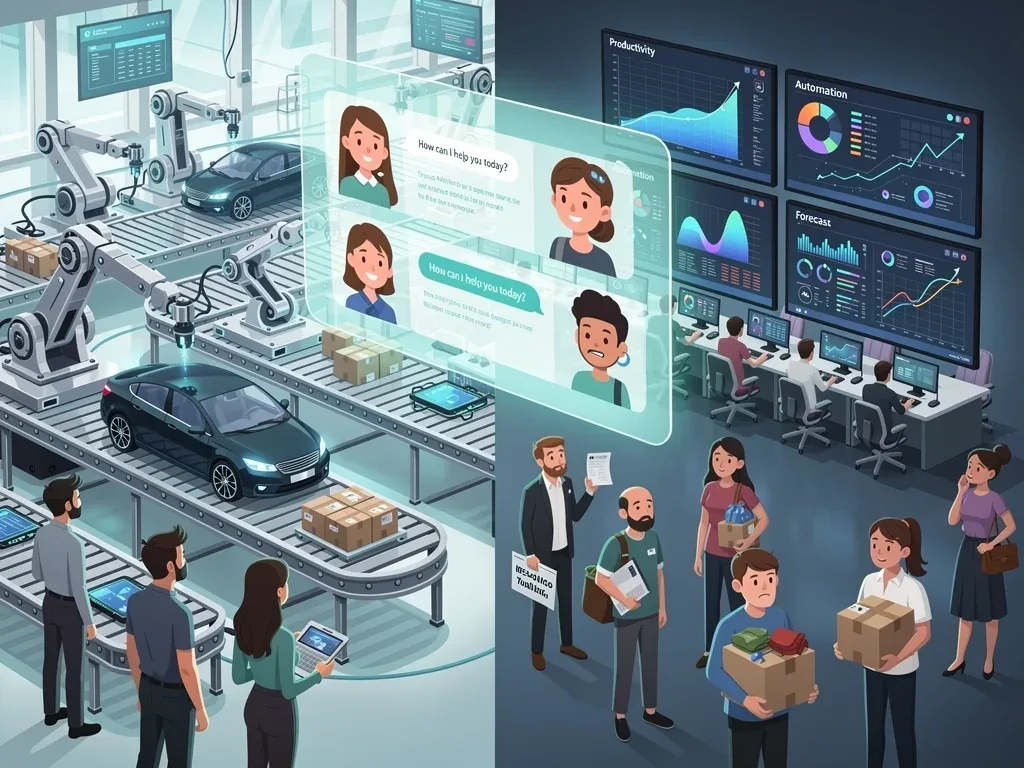
Policy Responses and Workforce Adaptation Strategies
In response to the Unemployment Shift, policymakers are beginning to formulate strategies aimed at mitigating negative impacts and leveraging the benefits of automation. These responses include investments in workforce development, education reform, and social safety nets designed to support displaced workers.
Key proposals focus on retraining initiatives that equip workers with skills relevant to emerging job markets, such as data science, AI development, and advanced technical support. The goal is to facilitate a smoother transition for individuals whose roles are affected by automation, ensuring they remain competitive in a changing economy.
Additionally, discussions are underway regarding potential policy adjustments to unemployment benefits, job placement services, and support for small businesses to innovate and create new employment opportunities. The urgency of these discussions is heightened by the unexpected nature of the unemployment shift.
Retraining and Upskilling Initiatives
Several government agencies and private organizations are launching or expanding retraining and upskilling initiatives. These programs aim to bridge the skills gap created by automation, providing pathways for workers to transition into high-demand roles.
The focus is on practical, hands-on training in areas like coding, cybersecurity, robotics maintenance, and advanced manufacturing. These initiatives are crucial for ensuring that the workforce can adapt to the new technological landscape and capitalize on new job opportunities.
The success of these programs will be vital in addressing the challenges posed by the Unemployment Shift. Effective implementation requires collaboration between government, industry, and educational institutions.
The Role of Education in a Changing Job Market
STEM Emphasis: Increased focus on Science, Technology, Engineering, and Mathematics education from an early age to prepare future generations for tech-driven careers.
Lifelong Learning: Promoting a culture of continuous learning and skill development, recognizing that career paths will be more fluid and require constant adaptation.
Vocational Training: Revitalizing and modernizing vocational and technical training programs to align with the specific needs of automated industries.
Digital Literacy: Ensuring all citizens possess fundamental digital literacy skills to navigate an increasingly technology-dependent world, regardless of their profession.
Industry Reactions and Business Adjustments
Industries across the board are reacting to the Unemployment Shift with a mix of concern and strategic planning. Businesses that have heavily invested in automation are now assessing the broader societal impact and their role in workforce transition.
Many companies are reviewing their automation strategies to ensure a more humane and sustainable approach, often exploring internal reskilling programs for their existing employees. The aim is to leverage automation for growth while minimizing disruption to their workforce where possible.
This includes re-evaluating the pace of automation implementation and actively engaging with employees to communicate changes and offer support. The unexpected unemployment shift serves as a stark reminder that technological progress must be balanced with social responsibility.

Impact on Different Demographics and Regions
The unexpected 4.1% unemployment shift is not uniformly distributed across all demographics and regions; certain groups and areas are experiencing more pronounced effects.
Workers in routine, manual, and administrative roles are often among the first to be impacted by automation, leading to disproportionate unemployment rates in these segments.
Geographically, regions heavily reliant on manufacturing or traditional service industries are witnessing higher rates of job displacement compared to areas with a strong presence of tech-driven or knowledge-based sectors.
This uneven impact necessitates targeted interventions to address specific community needs and vulnerabilities.
Understanding these demographic and regional disparities is critical for developing equitable and effective policy responses. The Unemployment Shift underscores the importance of a granular analysis to ensure no community is left behind in the transition to an automated economy.
Challenges for Vulnerable Worker Groups
Vulnerable worker groups, including those with lower educational attainment, limited access to technology, or in declining industries, face significant challenges. The rapid pace of automation can exacerbate existing inequalities, making it harder for these individuals to find new employment.
These groups often lack the resources or opportunities for adequate retraining, leading to prolonged periods of unemployment or underemployment. Addressing these challenges requires targeted support systems, including financial aid, accessible training programs, and comprehensive job placement services.
The Labor Department's findings emphasize the urgent need for inclusive policies that protect and empower all segments of the workforce during this transformative period. The unexpected 4.1% unemployment shift highlights the critical nature of these support systems.
Regional Economic Disparities
Industrial Belt: Regions with a historical reliance on heavy industry and manufacturing are experiencing significant job losses as factories automate.
Rural Areas: Limited access to high-speed internet and advanced educational resources can hinder rural workers' ability to adapt to new job market demands.
Coastal Tech Hubs: These areas may see job creation in tech-related fields but also face challenges with housing affordability and competition for highly skilled roles.
Service-Oriented Cities: Cities with large service sectors are facing automation in retail, hospitality, and administrative roles, requiring a focus on upskilling.
The Role of Government in Mitigating Automation's Effects
The government plays a crucial role in mitigating the adverse effects of automation highlighted by the Unemployment Shift. This involves not only reactive measures but also proactive strategies to shape the future of work.
Key governmental actions include investing in public education, funding research and development in emerging technologies, and establishing regulatory frameworks that balance innovation with worker protection. These efforts are essential for creating a resilient and adaptable labor market.
Furthermore, the government can facilitate partnerships between educational institutions and industries to ensure that training programs align with current and future job demands. This collaborative approach is vital for navigating the complexities of automation-driven change.
Long-Term Outlook: A Transformed Workforce
The long-term outlook for the U.S. workforce, shaped significantly by the Unemployment Shift, points towards a landscape profoundly transformed by automation. While some jobs will be displaced, new roles requiring different skill sets are expected to emerge, leading to a net change in the composition of employment.
This transformation will necessitate a continuous emphasis on lifelong learning, adaptability, and critical thinking skills across all sectors.
The workforce of the future will likely be characterized by greater flexibility, a higher demand for specialized technical skills, and an increased focus on uniquely human capabilities such as creativity and emotional intelligence.
Preparing for this future requires foresight and sustained investment in human capital, ensuring that the benefits of technological progress are broadly shared. The unexpected 4.1% unemployment shift serves as a powerful catalyst for accelerating these necessary adjustments.
Key Point | Brief Description |
|---|---|
Unemployment Shift | Unexpected 4.1% rise linked to automation disclosures. |
Automation Impact | January disclosures revealed widespread adoption affecting various sectors. |
Policy Response | Government and industry focus on retraining and adaptation strategies. |
Future Workforce | Emphasis on lifelong learning and new skill development for emerging roles. |
Frequently Asked Questions About the Unemployment Shift
What caused the unexpected 4.1% unemployment shift?▼
The shift is primarily attributed to the accelerated adoption of workplace automation technologies, including AI and robotics, following January's industry disclosures. Many companies automated tasks previously performed by human workers, leading to job displacement in specific sectors.
Which industries are most affected by this unemployment shift?▼
Manufacturing, customer service, administrative support, and logistics sectors have experienced significant impacts. These industries often involve repetitive tasks that are more easily automated, leading to higher rates of job displacement compared to other sectors.
What is the government doing to address this situation?▼
The government is exploring various policy responses, including increased investment in workforce retraining programs, education reform focusing on STEM and digital literacy, and adjustments to social safety nets to support displaced workers during this transition period.
How can workers prepare for a job market impacted by automation?▼
Workers can prepare by actively pursuing retraining and upskilling opportunities in high-demand fields such as data analysis, cybersecurity, and robotics maintenance. Developing critical thinking, problem-solving, and interpersonal skills will also be crucial for future job roles.
Will automation lead to a net loss of jobs in the long term?▼
While automation displaces some jobs, it also creates new ones, often requiring different skills. The long-term outcome is complex, with experts predicting a transformed workforce rather than a net loss, emphasizing adaptation, innovation, and continuous learning for future prosperity.
Looking Ahead: Navigating the Automated Future
The Unemployment Shift serves as a critical call to action for the nation. This development is not merely a transient economic blip but a clear signal of ongoing structural changes driven by technological advancement.
Moving forward, sustained collaboration between government, industry, and educational institutions will be paramount to ensure a resilient and equitable transition for the American workforce.
The focus must shift towards proactive strategies that foster adaptability, lifelong learning, and the development of future-proof skills. Monitoring subsequent labor reports and policy developments will provide further insight into the long-term trajectory of employment in an increasingly automated economy.
Understanding the nuances of the Unemployment Shift is essential for everyone, from individual workers to national policymakers. The path ahead requires informed decisions and collective efforts to harness the benefits of automation while mitigating its challenges.