Healthcare Policy Overhaul 2026: 12% Out-of-Pocket Caps
Anúncios
Managing medical expenses is about to get significantly less overwhelming for millions of families nationwide. A sweeping Healthcare Policy Overhaul is set to reset patient cost-sharing rules by capping annual out-of-pocket spending at 12% of household income.
This federal reform aims to protect patients from catastrophic medical debt while forcing health insurers to adjust their coverage structures. By establishing clear spending ceilings, the regulatory update ensures that essential treatments remain financially accessible without triggering personal bankruptcy.
For patients navigating chronic care or unexpected emergencies, these new patient protection mandates offer unprecedented financial predictability. Here is a breakdown of what these mandatory coverage limits mean for your household budget and how to prepare.
Understanding the New 12% Out-of-Pocket Caps
The core of the upcoming healthcare policy overhaul 2026 centers on the establishment of a 12% cap on out-of-pocket healthcare expenditures. This limit is designed to protect consumers from catastrophic medical bills, ensuring that a greater portion of their healthcare costs is covered.
This significant change applies to all health insurance plans regulated under federal law, including those offered through employers and the Affordable Care Act (ACA) marketplaces. It represents a unified effort to standardize patient financial responsibility across various insurance types.
The implementation of these caps is a direct response to persistent concerns about rising healthcare costs and the financial strain placed on American families. Officials emphasize that this measure aims to improve access to care by reducing financial barriers.
Defining Out-of-Pocket Maximums
Out-of-pocket maximums are the most an individual or family has to pay for covered services in a plan year before their health insurance starts paying 100% of the costs. These new caps will redefine what that maximum looks like for millions of Americans.
Previously, these limits varied significantly based on plan type, insurer, and even state regulations, creating a complex and often confusing landscape for consumers. The Nationwide Healthcare Policy Overhaul seeks to streamline this process.
All covered medical services, including doctor visits, hospital stays, and prescription drugs, contribute to the 12% cap.
The cap is calculated based on a percentage of the individual's or family's annual income, making it income-adjusted.
Preventive care services, as mandated by the ACA, will continue to be covered at 100% and do not count towards the out-of-pocket maximum.
Key Milestones Leading to Implementation
Several key milestones have been identified as critical points of interest in the lead-up to April 2026. These include further regulatory releases, public commentary periods, and educational campaigns aimed at informing the public and industry professionals.
The government plans extensive outreach programs to help individuals understand how the new caps will affect their specific health plans and financial situations. This proactive approach is vital for the successful integration of the healthcare policy overhaul 2026.
January 2025: Initial regulatory framework published for public comment.
July 2025: Final rule published, detailing specific methodologies for income-based caps.
October 2025 – March 2026: Health plans begin updating their systems and communicating changes to enrollees.
April 1, 2026: Nationwide Healthcare Policy Overhaul officially takes effect.
Impact on Consumers: What to Expect
For millions of Americans, the Nationwide Healthcare Policy Overhaul is expected to bring significant financial relief. The primary benefit is a predictable limit on annual medical expenses, which can prevent unexpected financial hardship.
Patients with chronic conditions or those requiring extensive medical treatments stand to benefit most, as their high costs will now be capped. This predictability allows for better financial planning and reduces the risk of medical debt.
However, consumers will also need to understand how their individual income will be used to calculate their personal 12% cap. This personalized approach means that the actual dollar amount of the cap will vary from person to person.

Navigating the New Financial Landscape
Understanding the nuances of the new policy will be crucial for consumers. Health plans are mandated to provide clear explanations of how the 12% cap applies to their specific coverage, including tools for tracking out-of-pocket spending.
Consumers are encouraged to review their plan documents carefully once updated information becomes available. Questions should be directed to their insurance providers or employer benefits administrators to ensure full comprehension.
Verify your income level with your health plan to ensure accurate cap calculation.
Track your medical expenses throughout the year to monitor progress towards your out-of-pocket maximum.
Understand which services count towards the cap and which are fully covered.
Implications for Healthcare Providers and Insurers
The Nationwide Healthcare Policy Overhaul presents both challenges and opportunities for healthcare providers and insurance companies. Insurers will need to significantly adjust their plan designs, actuarial models, and claims processing systems.
Providers, on the other hand, may see an increase in patient utilization as financial barriers are reduced. This could lead to higher demand for services, requiring adjustments in staffing and resource allocation.
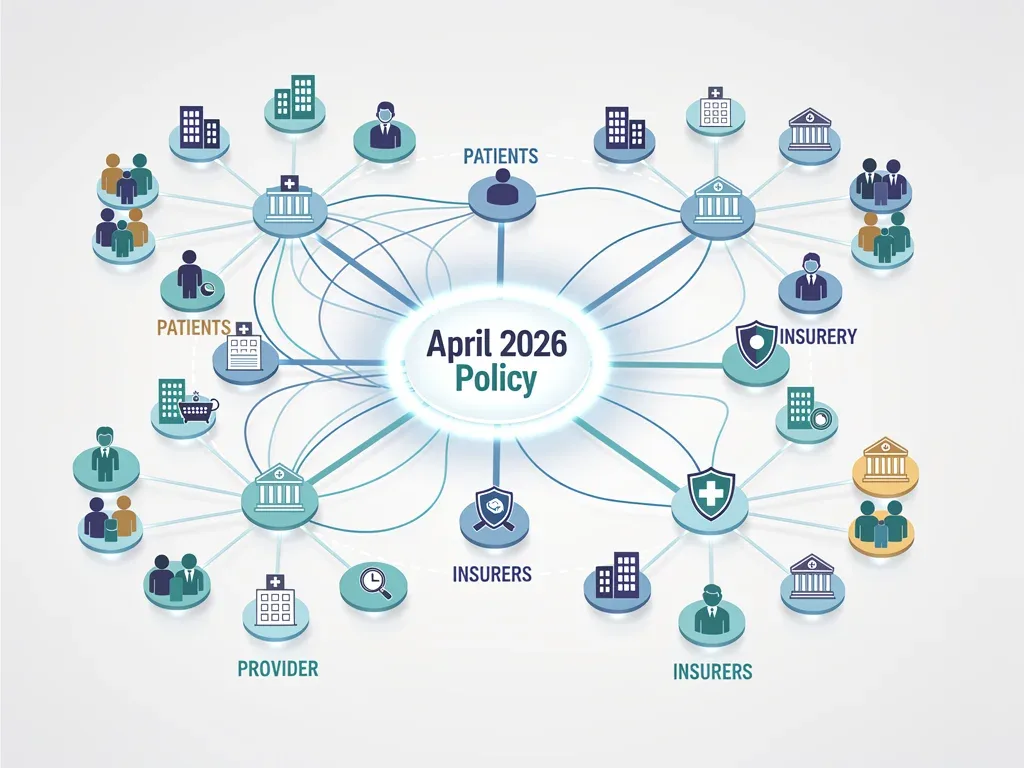
Collaboration between providers and insurers will be more critical than ever to ensure seamless implementation and compliance with the new regulations. The shift towards greater financial protection for patients will redefine many existing operational procedures.
Operational Adjustments and Compliance
Insurance companies are currently revamping their IT infrastructure to accommodate the new income-adjusted out-of-pocket caps. This includes developing new algorithms for calculating individual caps and updating member portals to display this information transparently.
Healthcare providers will need to refine their billing and collections processes to align with the new caps, ensuring they do not charge patients beyond their established maximums. Training staff on these new procedures will be essential for smooth operations.
Insurers must update plan documents and member communications to reflect the new 12% cap.
Providers should anticipate changes in patient payment patterns and adjust revenue cycle management.
Both parties must ensure data sharing and coordination to accurately track patient out-of-pocket spending.
Potential Economic and Public Health Outcomes
The broader economic and public health implications of the Nationwide Healthcare Policy Overhaul are substantial. Economically, it could lead to a reallocation of consumer spending, as less money is tied up in unpredictable medical costs.
From a public health perspective, reducing financial barriers to care is expected to improve health outcomes. Patients may be more likely to seek timely treatment and adhere to prescribed care plans if they are not deterred by high costs.
However, there are also debates about the potential for increased healthcare utilization, which could strain provider resources and potentially lead to longer wait times for non-urgent services. The overall impact will be closely monitored.
Addressing the Cost-Benefit Analysis
Policy analysts are conducting extensive cost-benefit analyses to fully understand the long-term effects of the healthcare policy overhaul 2026. Initial projections suggest a net positive impact on consumer welfare, but the funding mechanisms and their sustainability are still under scrutiny.
The government asserts that the benefits of improved public health and reduced financial instability outweigh the administrative costs and potential increases in utilization. However, continuous evaluation will be necessary to confirm these projections.
Reduced medical debt for individuals and families.
Potential for improved preventative care and early intervention.
Increased administrative burden for insurers and healthcare providers initially.
Addressing Concerns and Future Adjustments
While the Nationwide Healthcare Policy Overhaul is largely seen as a positive step, some concerns have been raised regarding its implementation and potential unintended consequences. Stakeholders are actively engaging in discussions to address these issues before the effective date.
One primary concern revolves around the accurate and equitable calculation of income for the 12% cap, especially for individuals with fluctuating incomes or complex financial situations. Clarity on this aspect is crucial for fair application of the policy.
Another area of focus is ensuring that small healthcare providers and rural hospitals have the resources to adapt to the new billing and administrative requirements. Support programs are being considered to assist these entities.
Anticipated Policy Refinements
It is common for large-scale policy changes to undergo refinements after initial implementation, and the healthcare policy overhaul 2026 is unlikely to be an exception. Federal agencies have indicated a willingness to monitor the policy's effects and make adjustments as needed.
Feedback from patients, providers, and insurers will be instrumental in shaping any future modifications to the 12% out-of-pocket caps. This adaptive approach aims to ensure the policy remains effective and equitable over time.
Public forums and comment periods will continue post-implementation to gather feedback.
Data on healthcare utilization and financial impacts will be collected for ongoing analysis.
Potential for technical adjustments to income verification processes to enhance fairness.
How the New Caps Compare to Previous Regulations
The Nationwide Healthcare Policy Overhaul represents a significant departure from previous healthcare spending limits. Historically, out-of-pocket maximums were set as fixed dollar amounts, often varying widely and not adjusted for individual income.
Under the ACA, fixed out-of-pocket maximums were established, but these figures could still be substantial for lower-income individuals. The new policy introduces an income-adjusted percentage, making the cap more progressive and potentially more equitable.
This shift from a fixed dollar amount to an income-based percentage reflects a fundamental change in philosophy, prioritizing affordability and access over a one-size-fits-all approach. It's a key aspect of the healthcare policy overhaul 2026.
Evolution of Out-of-Pocket Protections
Prior to the ACA, many insurance plans lacked out-of-pocket maximums entirely, leaving consumers vulnerable to unlimited medical expenses. The ACA introduced crucial protections, which the new policy now aims to strengthen and refine.
The 12% cap is designed to provide a more robust safety net, ensuring that no individual or family spends an exorbitant portion of their income on healthcare costs. This progressive approach is a direct response to years of advocacy for more affordable healthcare.
Previous caps were fixed dollar amounts, not income-adjusted.
The new 12% cap provides a more equitable protection, particularly for lower and middle-income households.
This policy aims to reduce the financial burden of healthcare more effectively than prior regulations.
Preparing for the Nationwide Healthcare Policy Overhaul
As the April 2026 effective date approaches, preparation is key for all parties involved in the Nationwide Healthcare Policy Overhaul. Consumers should begin to familiarize themselves with the concept of income-adjusted caps and understand how their personal finances might be affected.
Employers need to work closely with their insurance brokers and human resources departments to update benefit packages and communicate changes to their employees. This proactive communication can prevent confusion and ensure a smooth transition.
Healthcare providers should review their current billing practices and financial counseling services to ensure they align with the new regulations. Investing in staff training and updated software will be essential for compliance.
Actionable Steps for Stakeholders
Taking actionable steps now can significantly ease the transition into the new healthcare landscape. Early engagement with the policy details will ensure readiness for the healthcare policy overhaul 2026.
Staying informed through official government channels and reputable news sources is paramount. This will help clarify any evolving guidance and ensure that all adjustments are made in a timely and compliant manner.
For Consumers: Review current health plan details, understand your income, and look for official guidance from federal and state health departments.
For Employers: Consult with benefits experts to redesign plans, update employee handbooks, and conduct informative sessions for staff.
For Providers: Assess billing systems, train financial counselors, and ensure electronic health record (EHR) systems can track new out-of-pocket limits.
Key Policy Aspect | Brief Description of Change |
|---|---|
Out-of-Pocket Cap | New 12% income-adjusted limit on annual medical expenses. |
Effective Date | April 1, 2026, for all federally regulated health plans. |
Impact on Consumers | Increased financial predictability and protection from high costs. |
Provider Adjustments | Updates to billing, claims processing, and patient communication. |
Frequently Asked Questions About the Healthcare Policy Overhaul
What exactly is the 12% out-of-pocket cap?▼
The 12% out-of-pocket cap signifies that your annual medical expenses, including deductibles, co-payments, and co-insurance, will not exceed 12% of your adjusted gross income. Once this threshold is met, your health insurance plan will cover 100% of your remaining covered medical costs for that plan year.
When does the Nationwide Healthcare Policy Overhaul officially begin?▼
The Nationwide Healthcare Policy Overhaul, including the new 12% out-of-pocket caps, is scheduled to become effective on April 1, 2026. This date applies to all health insurance plans regulated by federal law, providing a unified implementation timeline across the United States.
Will this policy apply to all types of health insurance plans?▼
Yes, the 12% out-of-pocket cap will apply to most federally regulated health insurance plans. This includes plans offered through employers, those purchased on the Affordable Care Act (ACA) marketplaces, and certain other private insurance options. However, some grandfathered plans or specific state-regulated plans might have different rules.
How will my income be verified for the 12% cap calculation?▼
Income verification for the 12% cap will likely use data from your federal tax returns, specifically your adjusted gross income (AGI). Health plans will be responsible for obtaining or verifying this information, potentially through secure data-sharing agreements with federal agencies. Specific details are still being finalized.
What should I do to prepare for the 2026 healthcare policy changes?▼
To prepare, stay informed by monitoring official government announcements and updates from your health insurance provider or employer. Review your current health plan benefits, understand your annual income, and consider consulting a financial advisor or health benefits specialist if you have complex questions about the Nationwide Healthcare Policy Overhaul.
Looking Ahead: The Future of Healthcare Spending
The Nationwide Healthcare Policy Overhaul signifies a transformative step towards a more financially equitable healthcare system. As the implementation date approaches, continuous engagement and adaptation will be crucial for all stakeholders.
The success of this policy will depend on clear communication, robust administrative frameworks, and a willingness from all parties to embrace the changes. This initiative aims to reshape how Americans experience healthcare, making it more predictable and affordable.
Monitoring the initial impacts and subsequent adjustments will provide valuable insights into the long-term effectiveness of these caps in mitigating financial stress and improving access to essential medical services across the nation.