Dual Enrollment: Earn 30 College Credits Before High School
Anúncios
Accelerating your academic trajectory starts with leveraging high school schedule flexibility to knock out foundational higher education requirements.
Earning College Credits through strategic dual enrollment programs allows ambitious students to finish up to 30 post-secondary units—equivalent to a full freshman year—before stepping foot on a university campus.
Enrolling in dual-credit university coursework slashes total tuition expenses and drastically reduces future student debt loads.
Accumulating transferable units early provides high schoolers with a head start on complex degree pathways, enabling them to graduate higher education faster or explore multiple major options without falling behind.
Mastering university-level rigor early ensures a smoother academic transition while boosting official transcript strength for admissions committees. Here is your complete guide to unlocking early post-secondary credit opportunities and building a cost-effective path toward your degree.
Understanding Dual Enrollment: A Strategic Advantage
Dual enrollment programs allow high school students to simultaneously earn high school and college credits. This unique opportunity provides a significant head start on higher education, potentially saving families thousands of dollars in tuition costs.
These programs are gaining traction across the United States as an effective way to accelerate academic progress. Students can enter college with a substantial number of credits already completed, often bypassing introductory courses.
Navigating the various options requires careful planning and understanding of the requirements set by both high schools and participating colleges. The benefits extend beyond financial savings, impacting academic readiness and future career prospects.
Authorities confirmed new timelines and outlined initial impacts across different regions regarding dual enrollment credits. Statements from representatives indicate short-term adjustments and a more defined path for upcoming decisions.
What Dual Enrollment Entails
Dual enrollment involves high school students taking college-level courses, either at their high school, on a college campus, or online. These courses are taught by qualified instructors, often college professors or high school teachers with advanced degrees.
The credits earned through these programs are typically transferable to most colleges and universities, though it is crucial for students to verify transfer policies with their intended higher education institutions. This verification ensures that the effort invested in earning dual enrollment credits truly pays off.
Understanding the structure of these programs is the first step toward leveraging them effectively. Each state and institution may have slightly different guidelines, making localized research essential for prospective participants.
Course Availability: Varies by high school and partnering college.
Credit Transferability: Must be verified with target colleges.
Instructor Qualifications: College-level standards are maintained.
Recent data helps clarify the scope and sequence of events surrounding dual enrollment credits. Markets and local communities reacted as information became public, with agencies coordinating responses under established protocols.
Eligibility and Application Process for Dual Enrollment
Eligibility for dual enrollment programs typically depends on a student's academic performance, including GPA and standardized test scores. High schools and colleges establish specific criteria to ensure students are prepared for the rigor of college-level work.
The application process usually involves submitting an application to the partnering college, providing high school transcripts, and sometimes taking placement tests. Early engagement with high school counselors is vital to understand specific requirements and deadlines.
Families should initiate this process well in advance to ensure all necessary paperwork is completed accurately and on time. Delays can result in missed opportunities to participate in these beneficial programs.
The topic’s background connects the update to previous milestones regarding dual enrollment credits. Analysts highlight short-term signals that deserve attention before broader trends become clear.

Key Steps to Apply
Students must first consult with their high school guidance counselor to discuss their interest in dual enrollment. Counselors can provide a list of available programs and help assess a student's readiness.
Next, students need to research the specific college partners and their course offerings. It is important to choose courses that align with academic interests and future college majors to maximize the relevance of the earned credits.
Finally, complete all application forms, including any required essays or recommendations, and submit them by the stated deadlines. Following up with both the high school and college ensures a smooth application experience.
Consult Counselor: Discuss interests and program options.
Research Programs: Align courses with academic goals.
Submit Application: Meet all deadlines and requirements.
Direct quotes and attributed summaries show positions, responsibilities, and next steps for dual enrollment credits. Independent experts assess the credibility of the information and likely outcome scenarios.
Benefits of Earning 30 College Credits Early
Earning 30 college credits before high school graduation offers numerous advantages, both academically and financially. Students can significantly reduce the overall cost of a college degree by completing a full year of college tuition-free or at a reduced rate.
Academically, students gain exposure to college-level coursework, which helps them develop essential study habits and time management skills. This early experience can lead to a smoother transition into full-time college enrollment.
Furthermore, having a substantial number of college credits can allow students to graduate from college early or pursue a double major or minor without extending their time in higher education. This flexibility is invaluable for future academic and career planning.
For now, practical effects are concentrated in specific areas, while broader impacts depend on future decisions and compliance with new guidelines for dual enrollment credits.
Financial and Academic Advantages
The financial savings from dual enrollment are substantial. With college tuition continually rising, completing 30 credits can equate to saving tens of thousands of dollars, making higher education more accessible.
Academically, students who participate in dual enrollment often demonstrate higher rates of college persistence and completion. They enter college with a stronger academic foundation and a clearer understanding of college expectations.
This early exposure also allows students to explore different fields of study without the pressure of full college tuition. It can help them confirm their major choice or discover new academic passions before committing to a specific path.
Reduced Tuition Costs: Significant savings on college education.
Academic Preparedness: Develop college-level study skills.
Early Graduation/Flexibility: Option to graduate early or pursue more studies.
Navigating Course Selection and Academic Rigor
Selecting the right courses is a critical component of a successful dual enrollment experience. Students should choose courses that are both challenging and relevant to their academic and career aspirations, ensuring they are prepared for the workload.
The academic rigor of dual enrollment courses mirrors that of college-level classes, demanding strong organizational skills and a commitment to independent study. Students must be prepared for more intensive reading, writing, and critical thinking than typically found in high school courses.
High school counselors and college academic advisors can provide guidance on course selection, helping students balance their dual enrollment schedule with their remaining high school responsibilities. This support system is crucial for student success.
Transferring Dual Enrollment Credits to College
Ensuring that dual enrollment credits transfer to a student's chosen college is paramount. While many credits are widely accepted, transfer policies can vary significantly between institutions, making early research essential.
Students should proactively contact the admissions or registrar's office at their prospective colleges to inquire about their specific dual enrollment credit transfer policies. It is advisable to obtain this information in writing whenever possible.
Understanding which credits will apply to general education requirements, major requirements, or simply elective credits can impact a student's overall academic plan. This due diligence guarantees that the earned dual enrollment credits are maximized.
Verifying Transfer Policies
Begin by compiling a list of potential colleges and their respective transfer credit policies. Many college websites have dedicated sections outlining these guidelines, often searchable by course subject or program type.
Next, contact the admissions or registrar's office directly. Provide them with the specific course names, numbers, and the institution where the dual enrollment credits were earned. Ask for confirmation on how these credits will be applied.
Finally, keep detailed records of all communications, course syllabi, and official transcripts. This documentation will be invaluable if any discrepancies arise during the official credit transfer process upon college enrollment.
Research College Policies: Check prospective college websites.
Contact Admissions: Confirm specific course transferability.
Maintain Records: Keep documentation of courses and communications.
Overcoming Challenges in Dual Enrollment
While dual enrollment offers substantial benefits, students may encounter challenges, including managing increased academic workload and social adjustments. Balancing college-level courses with high school demands requires effective time management and self-discipline.
Socially, students might feel a disconnect between their high school peers and their college classmates, who are often older. Finding a balance between these two environments is key to a holistic educational experience.
Support systems, including counselors, teachers, and parents, play a crucial role in helping students navigate these challenges. Open communication and proactive problem-solving are essential for sustained success in earning dual enrollment credits.
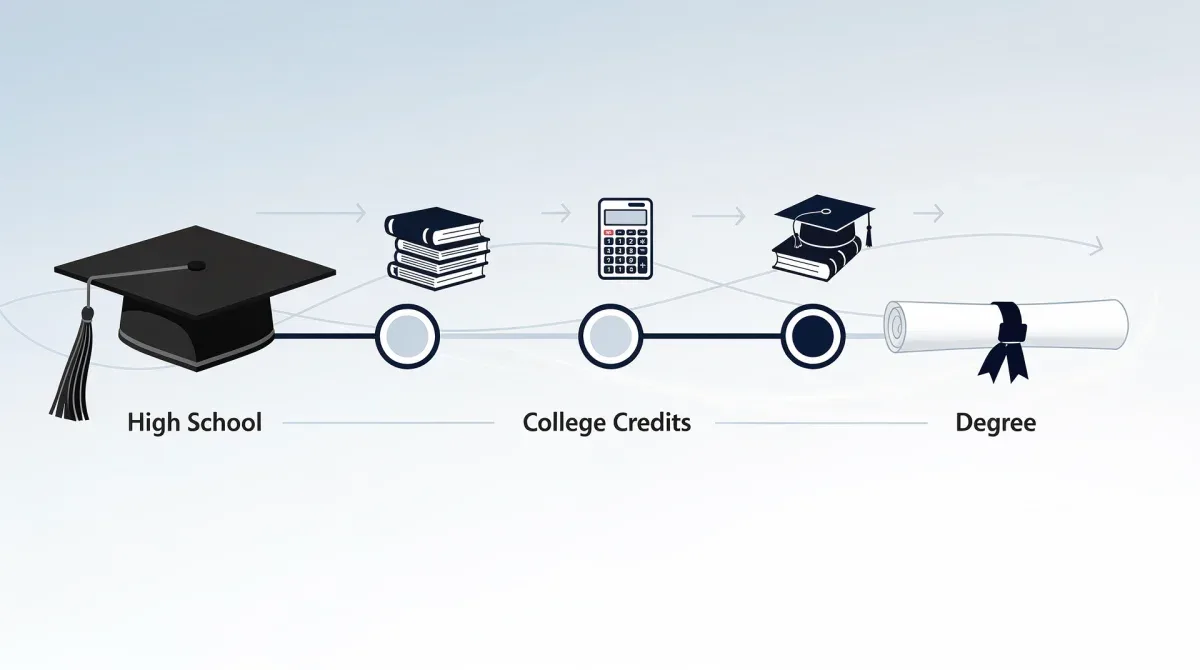
Strategies for Success
Time management is paramount; students should create a structured study schedule and stick to it. Prioritizing assignments and allocating sufficient time for each course helps prevent burnout and ensures academic excellence.
Seeking help when needed is also vital. Whether it's from a professor, a tutor, or a study group, utilizing available resources can make a significant difference in understanding complex material and improving performance.
Maintaining a healthy work-life balance is equally important. Engaging in extracurricular activities or hobbies can provide a much-needed break from academic pressures and contribute to overall well-being.
Effective Time Management: Create and follow a study schedule.
Utilize Support Systems: Seek help from professors, tutors, and counselors.
Maintain Balance: Engage in extracurriculars and self-care.
Future Outlook: Expanding Access to Dual Enrollment
The landscape of dual enrollment continues to evolve, with increasing efforts to expand access and equity for all students. Policymakers and educational institutions are recognizing the transformative potential of these programs.
Initiatives are underway to reduce financial barriers, provide more robust academic support, and broaden the range of available courses. This expansion aims to make dual enrollment a viable option for a more diverse student population, not just those already academically advanced.
As these programs mature, they are poised to become an even more integral part of the educational journey for high school students across the nation. The emphasis on earning dual enrollment credits will likely grow, shaping future college readiness standards.
Key Point | Brief Description |
|---|---|
Early College Credits | High school students earn college credits simultaneously, accelerating their academic journey. |
Cost Savings | Significantly reduces overall college tuition expenses by completing courses at a lower cost. |
Academic Readiness | Prepares students for college-level rigor, improving study habits and transition success. |
Credit Transferability | Requires verification with target colleges to ensure earned credits are accepted and applied. |
Frequently Asked Questions About Dual Enrollment
What are the primary benefits of dual enrollment credits?▼
The primary benefits include significant cost savings on college tuition, accelerated degree completion, and early exposure to college-level academic rigor. Students gain a competitive edge in college applications and develop stronger study habits before full-time university enrollment, making the transition smoother and more successful.
How many dual enrollment credits can a high school student earn?▼
While the goal of this guide is to achieve 30 college credits, the exact number can vary by state, high school, and partnering college policies. Some programs cap the number of credits, while others are more flexible. Students should consult their high school counselor and college advisors for specific limits applicable to their situation.
Are dual enrollment credits widely accepted by universities?▼
Most accredited colleges and universities accept dual enrollment credits, especially from regionally accredited institutions. However, transfer policies vary widely, so it is crucial for students to verify with each prospective institution how credits will be applied toward their specific degree programs before committing to dual enrollment courses.
What are the eligibility requirements for dual enrollment?▼
Eligibility typically includes a minimum GPA, often around 2.5 or 3.0, and sometimes requires specific standardized test scores or placement test results. Students must demonstrate academic readiness for college-level work. Specific requirements are set by individual high schools and partnering colleges, necessitating direct inquiry.
How do dual enrollment courses differ from AP or IB courses?▼
Dual enrollment courses directly award college credits upon successful completion, whereas AP or IB courses require students to pass a standardized exam to potentially earn college credit. Dual enrollment offers a more direct pathway to earning transferable credits without the pressure of a single high-stakes exam. Both are excellent options for advanced students.
Looking Ahead
The ongoing emphasis on a College Credits helps clarify the next steps and defines the key points to watch. It is worth following official announcements, confirming local guidance, and monitoring indicators tied to dual enrollment credits, since future decisions may reshape medium-term effects.
This movement towards early college exposure underscores a significant shift in educational strategy, aiming to better prepare students for the demands of higher education and the modern workforce.